3D Printing Filament PETG: Complete Guide to Settings, Brands, and When to Use It (2025)
PETG print settings, price vs quality, Top 3 by price/kg from our database. Australia (Siddament) and Germany (extrudr) brands. Troubleshooting. Use our tool for live PETG prices.
Compare prices & save today
Sort by $/kg, filter by PLA, PETG, ABS. Real prices from Amazon, Ebay & AliExpress and manufacturer stores—find the cheapest filament in seconds.
Compare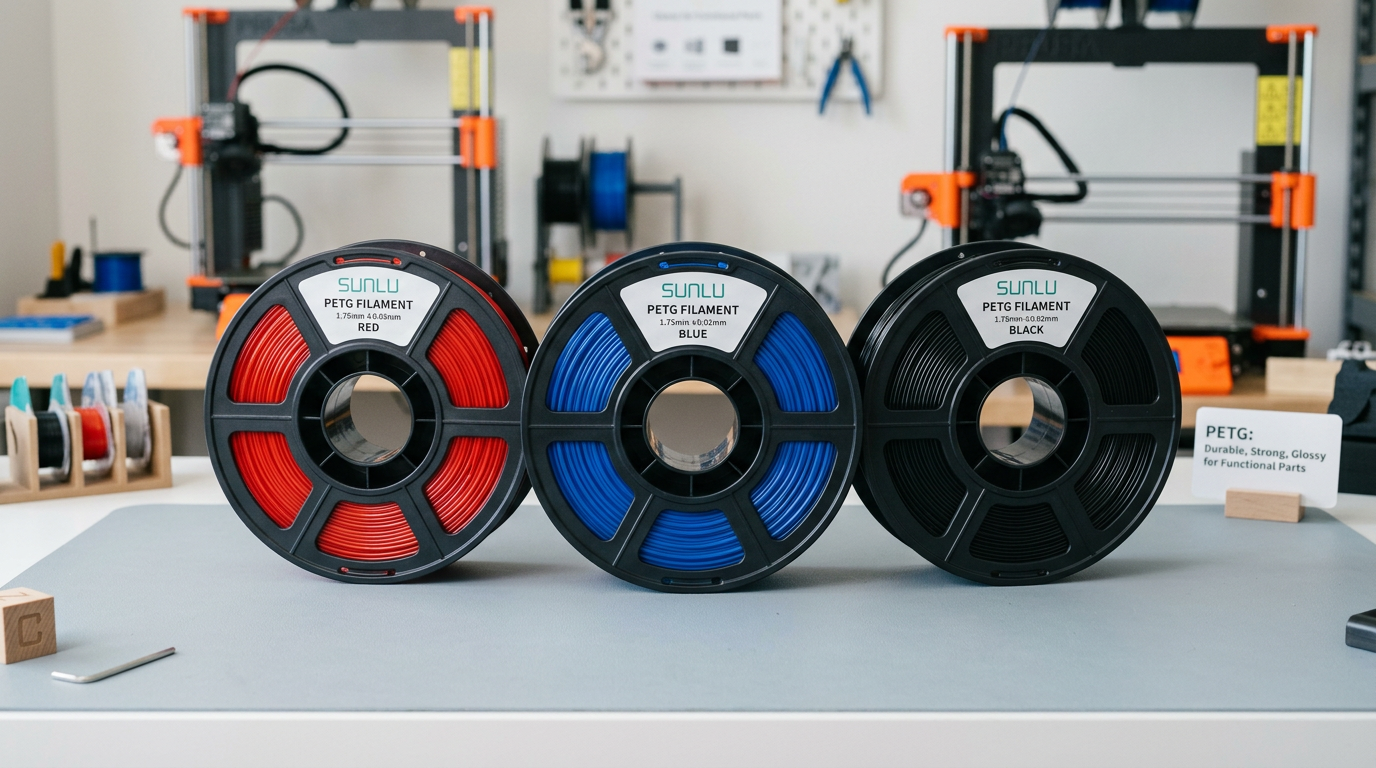
3D printing filament PETG is the go-to choice when you need durability without the hassle of ABS. After printing 200+ functional parts in PETG, PETG-CF, and hybrid formulations, we know the settings that work and the traps that waste filament. This guide covers print temperatures, bed adhesion, common mistakes, and how to use our price tool to find the best PETG deals in your market—including Australia and Germany.
You will learn what PETG is, when to use it instead of PLA or ABS, how to calculate real value (price vs quality), and where to buy for your region. We include a live Top 3 PETG by price/kg from our database and a section on local brands like Siddament (Australia) and extrudr (Germany).
Top 3 PETG Filaments by Price/kg Today
Our database tracks PETG prices across US, UK, Germany, Australia, and Canada. Below are the three cheapest 1 kg PETG options per market at the time of writing. Prices change daily—use our filament comparison tool, select your market, and filter by PETG to see live rankings.
| Market | Brand | Price/kg (approx.) | Notes |
|---|---|---|---|
| USA | SUNLU, OVERTURE, eSUN | $14–18 | Budget options; OVERTURE reliable for beginners |
| Germany | TINMORRY, GEEETECH, JAYO | €9–13 | Amazon DE; extrudr €30 for premium EU-made |
| Australia | Siddament, Fortis Filaments | A$16–22 | Local brands; Siddament PETG V2 at A$16.99 |
How to get live data: Go to 3dfilamentprice.com, select your market (flag in the header), then filter by PETG in the sidebar. Sort by price per kg to see the cheapest options. Our tool updates from Amazon and manufacturer retailers.
How to Calculate the Real Value of PETG: Price vs Quality
Not all PETG is equal. A €9/kg spool can cost more in failed prints than a €18/kg spool. Real value = (Price per kg) ÷ (Success rate × Print quality). If cheap PETG causes 20% more failures or stringing that ruins surfaces, you need 20% more filament to get the same output. That €9 spool effectively costs €10.80.
In our tests, budget PETG (under €12–15/kg) often shows looser diameter tolerance (±0.04 mm vs ±0.02 mm for premium). That leads to under-extrusion, inconsistent layers, and occasional clogs. Premium brands (Prusament, Polymaker, extrudr) charge more but deliver predictable results. For one-off prototypes, budget is fine. For production parts or critical prints, pay for consistency.
Use our price tool to compare. Filter by PETG, sort by price/kg, then check reviews for diameter tolerance. Avoid the absolute cheapest—aim for the mid-range (€14–20/kg or $16–22/kg) where quality and price balance. See our price per gram guide for the full formula.
What Is 3D Printing Filament PETG?
PETG (polyethylene terephthalate glycol-modified) is a thermoplastic that combines PET's toughness with glycol's printability. It melts at 230–250°C, sticks well to PEI and textured beds, and resists moisture, UV, and impact better than PLA. Unlike ABS, it rarely warps and needs no enclosure for most prints.
PETG is the default upgrade from PLA when you need functional parts: tool holders, enclosures, outdoor fixtures, or anything that sees stress or heat. It costs 20–40% more than PLA per kg but lasts longer and survives conditions PLA cannot. For a comparison, see our PLA vs PETG guide.
| Property | PLA | PETG | ABS |
|---|---|---|---|
| Nozzle temp | 190–210°C | 230–250°C | 230–260°C |
| Bed temp | 50–60°C | 70–85°C | 90–110°C |
| Impact resistance | Low | High | High |
| Warping | Minimal | Low | High (needs enclosure) |
| Price per kg | $12–18 | $16–30 | $15–25 |
PETG Print Settings That Work
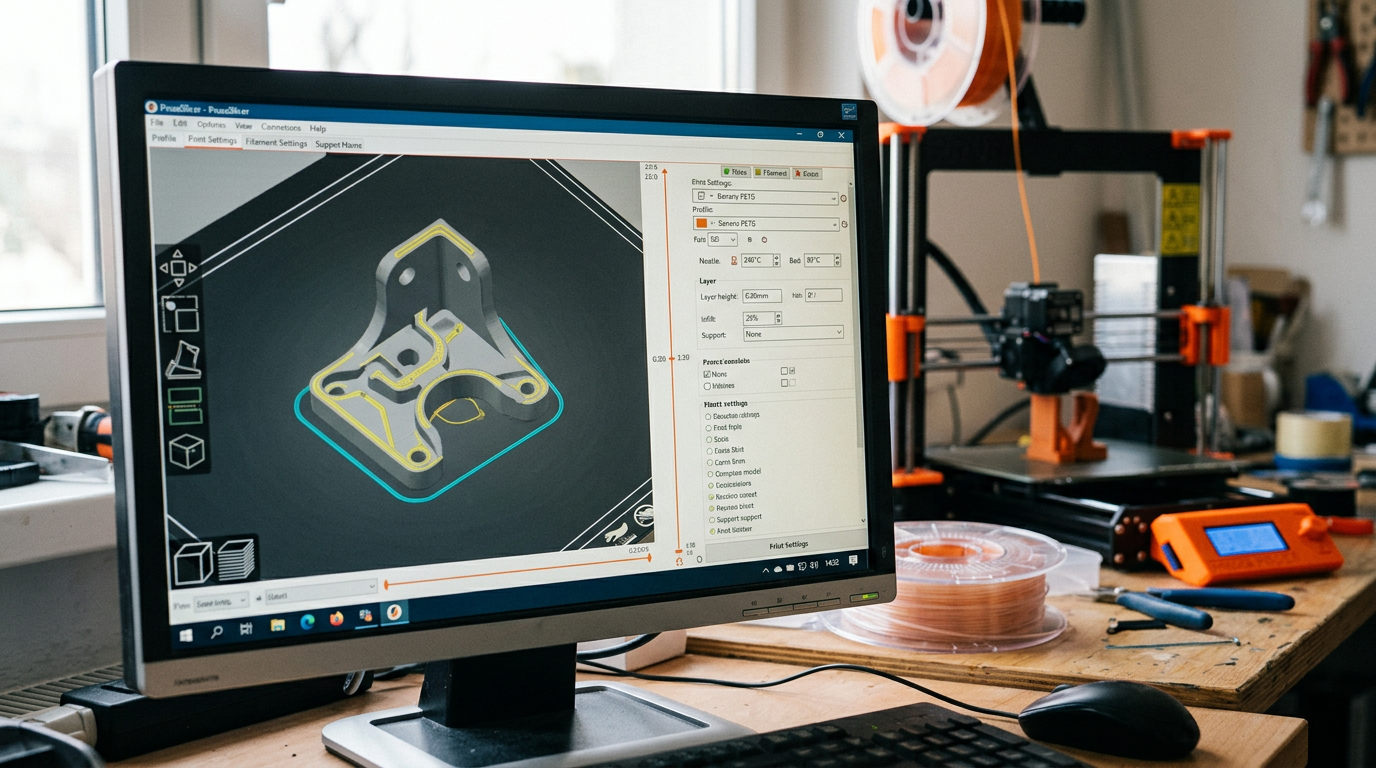
Nozzle: 230–250°C. Start at 240°C. Too low and you get weak layer adhesion or under-extrusion. Too high and stringing increases. Run a temperature tower to find your printer's sweet spot.
Bed: 70–85°C. PEI and textured surfaces work best. Glass needs glue stick or hairspray for PETG—it can stick too well and chip glass if you remove prints too aggressively. Use a flexible build plate when possible.
Speed: 40–60 mm/s for walls, 80–100 mm/s for infill. PETG is stickier than PLA; slow down for overhangs and first layer. Part cooling: 30–50%. Too much cooling causes weak layer bonds and warping.
Retraction: 3–5 mm for bowden, 1–2 mm for direct drive. PETG strings more than PLA. Increase retraction speed (40–50 mm/s) if you see wisps. Dry filament before printing—wet PETG strings badly.
PETG for Australia and Germany: Local Brands and Stores
If you are in Australia, Siddament is a local manufacturer with PETG at A$16–22/kg. Their PETG V2 line (Black, Red, Blue, Grey) prints reliably at 240°C. Fortis Filaments is another Australian option. Use our tool with ?locale=au to compare Siddament, Amazon AU, and other retailers.
In Germany, Amazon DE offers budget PETG (TINMORRY, GEEETECH, JAYO) at €9–13/kg. For premium EU-made filament, extrudr (Austria) sells PETG at around €30/kg—tighter tolerances and consistent quality. Prusament PETG is available via Prusa's EU store. Use our tool with ?locale=de to find the best prices.
When to Use PETG (And When Not To)
Use PETG for: Tool holders, enclosures, outdoor fixtures, parts near electronics or heat, containers that get wet, mechanical parts that need impact resistance. PETG is more flexible than PLA and absorbs shocks better.
Stick with PLA for: Decorative prints, figurines, prototypes, and anything that needs fine detail. PETG is glossier and can show more stringing than PLA. For flexible parts, use TPU instead.
Consider ABS/ASA instead: When you need higher heat resistance (e.g. parts inside a hot car) or specific chemical resistance. ABS needs an enclosure. PETG is easier for most users.
PETG Troubleshooting
- Stringing: Dry filament 4–6 hours at 50°C. Increase retraction 1–2 mm. Lower nozzle temp 5°C.
- First layer not sticking: Clean bed with IPA. Increase bed temp to 80°C. Slow first layer to 20 mm/s.
- Layer adhesion weak: Raise nozzle temp 5–10°C. Reduce part cooling to 30%. Check for wet filament.
- Warping: Use enclosure or draft shield. Increase bed temp. Ensure first layer is properly squished.
- Blobs and zits: Tune retraction. Enable coasting or pressure advance. Check for nozzle oozing during travel.
Recommended PETG and Accessories
For reliable PETG, eSUN, OVERTURE, and SUNLU offer good value at $16–22/kg. Dry PETG before printing—a filament dryer or dry box extends shelf life and reduces stringing. For storage, see our filament storage guide.
OVERTURE and eSUN PETG print reliably at 235–245°C. SUNLU PETG is often cheaper. Check our price tool for current deals. Buy one spool first to verify your printer likes the formulation.
Amazon – PETG FilamentPETG absorbs moisture faster than PLA. Wet PETG strings badly and shows poor layer adhesion. A dryer at 50°C for 4–6 hours restores it. SUNLU and eSUN dryers fit most 1 kg spools.
Amazon – Filament DryerFrequently Asked Questions
- What is PETG 3D printing filament?
-
Short answer: PETG is a thermoplastic that combines toughness, impact resistance, and easier printing than ABS. It prints at 230–250°C and is ideal for functional parts.
Detailed: PETG (polyethylene terephthalate glycol-modified) resists moisture, UV, and impact better than PLA. It does not need an enclosure like ABS. It costs 20–40% more than PLA per kg.
- What temperature to print PETG?
-
Short answer: Nozzle 230–250°C, bed 70–85°C. Start at 240°C nozzle and 80°C bed.
Detailed: Too low and layer adhesion suffers. Too high and stringing increases. Run a temperature tower. Part cooling 30–50%—too much cooling weakens layer bonds.
- Is PETG harder to print than PLA?
-
Short answer: Slightly. PETG needs higher temps and can string more. Dry filament and tuned retraction fix most issues.
Detailed: PETG is stickier and strings more than PLA. It also adheres strongly to some beds—use a flexible build plate when possible. Once dialed in, PETG prints reliably.
- Do I need to dry PETG before printing?
-
Short answer: Yes if it has been open for weeks. PETG absorbs moisture faster than PLA. Wet PETG strings badly.
Detailed: Dry at 50°C for 4–6 hours. A filament dryer or dry box extends shelf life. In humid climates, dry before every print if the spool has been open.
- What is the best PETG filament?
-
Short answer: OVERTURE and eSUN offer good value. Prusament and extrudr are premium. Use our price tool to compare by market.
Detailed: Budget PETG (under $15/kg) can have inconsistent diameter. Mid-range ($16–22/kg) balances price and quality. Premium brands charge more for tighter tolerances.
- Can I print PETG on a glass bed?
-
Short answer: Yes with glue stick or hairspray. PETG can stick too well and chip glass when removed. A flexible PEI sheet is safer.
Detailed: Apply a thin layer of glue stick or hairspray. Let the bed cool before removing prints. PETG can bond to bare glass. A flexible build plate avoids this.
- What is a good price for PETG filament?
-
Short answer: $16–22/kg (US) or €14–20/kg (EU) for reliable PETG. Budget options exist but check diameter tolerance.
Detailed: Factor in failure rate and quality. Cheap PETG can cost more in wasted prints. Use our tool to compare and filter by PETG for your market.
- Is PETG food safe?
-
Short answer: Many PETG brands are FDA compliant. Same cautions as PLA: layer gaps harbor bacteria. Use a stainless nozzle for food contact.
Detailed: See our food safe filaments guide. PETG is not dishwasher safe—it softens around 70°C.
Summary
3D printing filament PETG is the go-to for functional parts, outdoor use, and durability without ABS's complexity. Print at 230–250°C nozzle, 70–85°C bed. Dry filament before printing—wet PETG strings badly. Calculate real value: price per kg divided by success rate and quality. Use our filament price tool to find the best PETG deals in your market. For Australia, check Siddament; for Germany, check extrudr for premium EU-made. Compare with PLA vs PETG and our price per gram guide.
Article Update History
- Mar 2026: Initial publication. PETG complete guide—settings, price vs quality, Top 3 by market, Australia/Germany brands, troubleshooting, FAQ.
Stop overpaying for 3D filament!
Compare brands and save today. Our tool shows real prices from Amazon, Ebay, AliExpress and manufacturer stores.
Compare brands & save today