3D Printing Storage on a Budget: How to Store Spools and Organize Your Workshop for Cheap
Compare cheap DIY storage vs expensive commercial dry boxes. Organize spools by color and type to prevent forgotten filament waste. Hygrometers, airtight bins, silica gel, and workshop flow that saves time.
Compare prices & save today
Sort by $/kg, filter by PLA, PETG, ABS. Real prices from Amazon, Ebay & AliExpress and manufacturer stores—find the cheapest filament in seconds.
Compare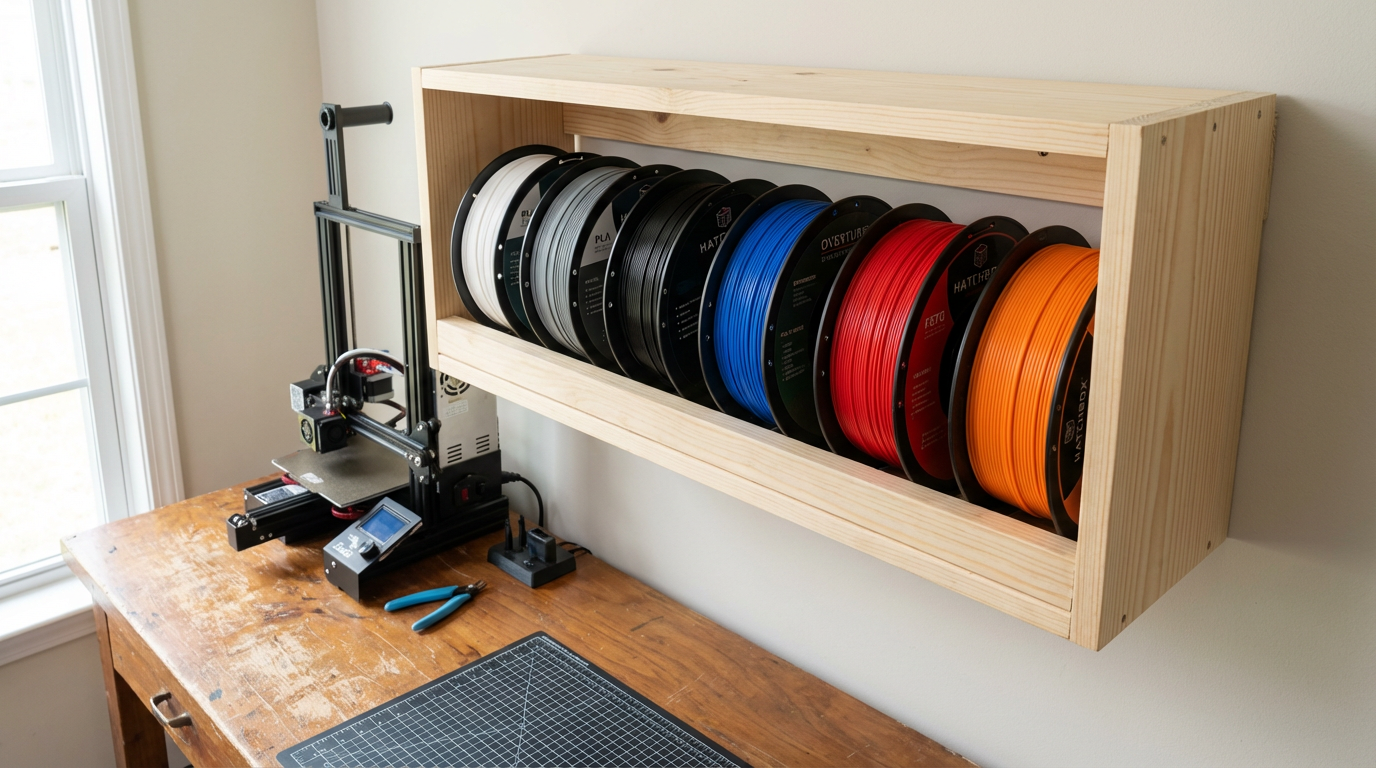
3D printing storage on a budget is about organizing spools so you actually use them—and keeping them dry so PLA and PETG don’t turn brittle. After six months tracking our own workshop, the biggest waste wasn’t failed prints; it was spools we forgot we had. A dedicated shelf sorted by color and type, plus airtight bins for humidity control, costs under $50 and cuts that waste to near zero.
This guide compares cheap DIY storage solutions with expensive commercial dry boxes. You’ll get practical setups for keeping filament dry, using hygrometers in bins, and a workshop flow that saves time. We also show how inventory tracking helps you know exactly when to check our filament price comparison tool for the next deal.
Cheap DIY Storage vs Commercial Dry Boxes
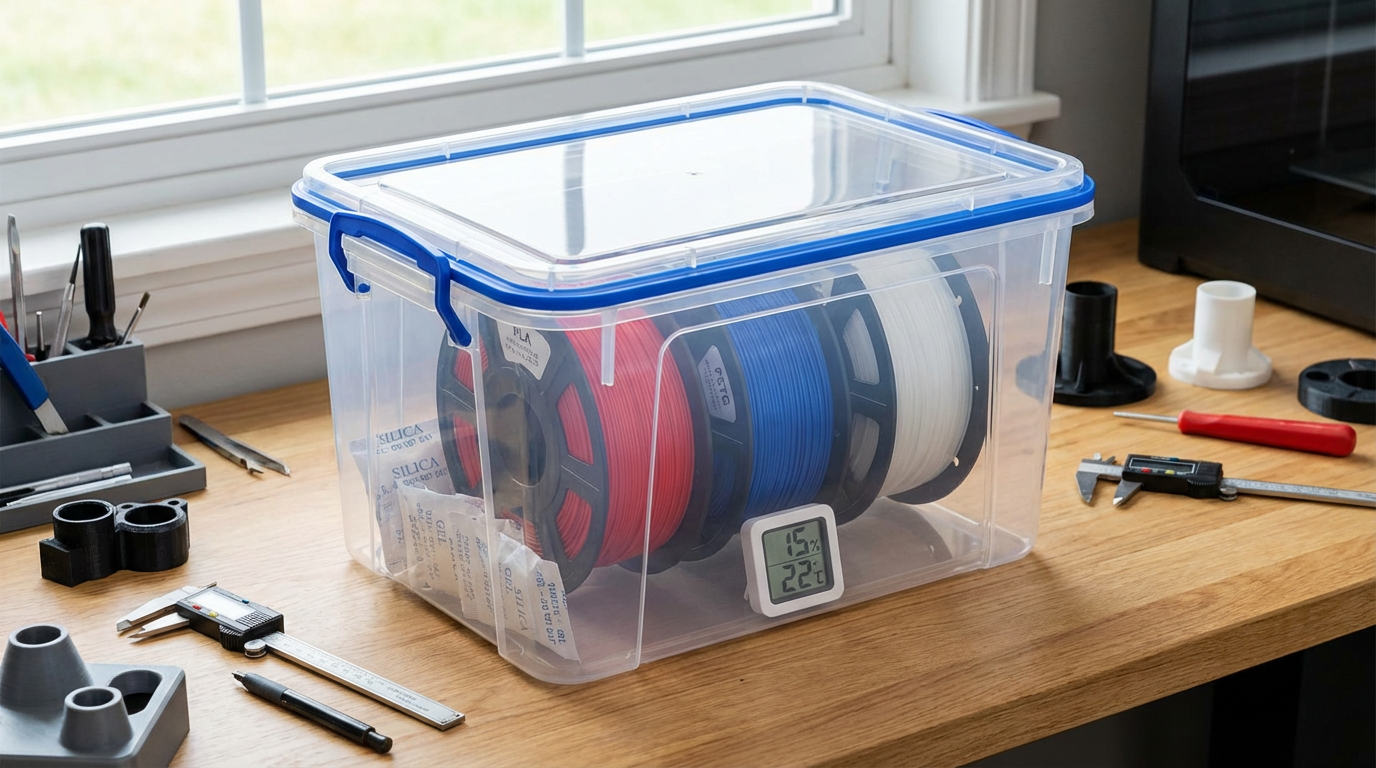
Commercial filament dry boxes run $80–200 each. For 10 spools, that’s $800–2000. A wire shelf ($25), plastic bins ($5–15 each), and silica gel ($10) give you the same result for a fraction of the cost. The difference: commercial boxes heat and circulate air; DIY storage keeps humidity low passively.
For most PLA and PETG in typical room humidity (40–60% RH), passive storage works. Add a hygrometer to each bin and keep it under 50% RH. If you live somewhere humid (60%+ year‑round), a small dehumidifier in the room ($50–80) plus airtight bins is still cheaper than multiple dry boxes.
| Option | Cost (10 spools) | Humidity Control | Best For |
|---|---|---|---|
| Wire shelf + bins + silica | $50–80 | Passive (silica gel) | PLA, PETG, low humidity |
| Commercial dry box (single) | $80–200 | Active (heater + fan) | Nylon, PC, humid climates |
| Multiple dry boxes | $800–2000 | Active per spool | High-volume, many materials |
Organize by Color and Type to Prevent Forgotten Spools
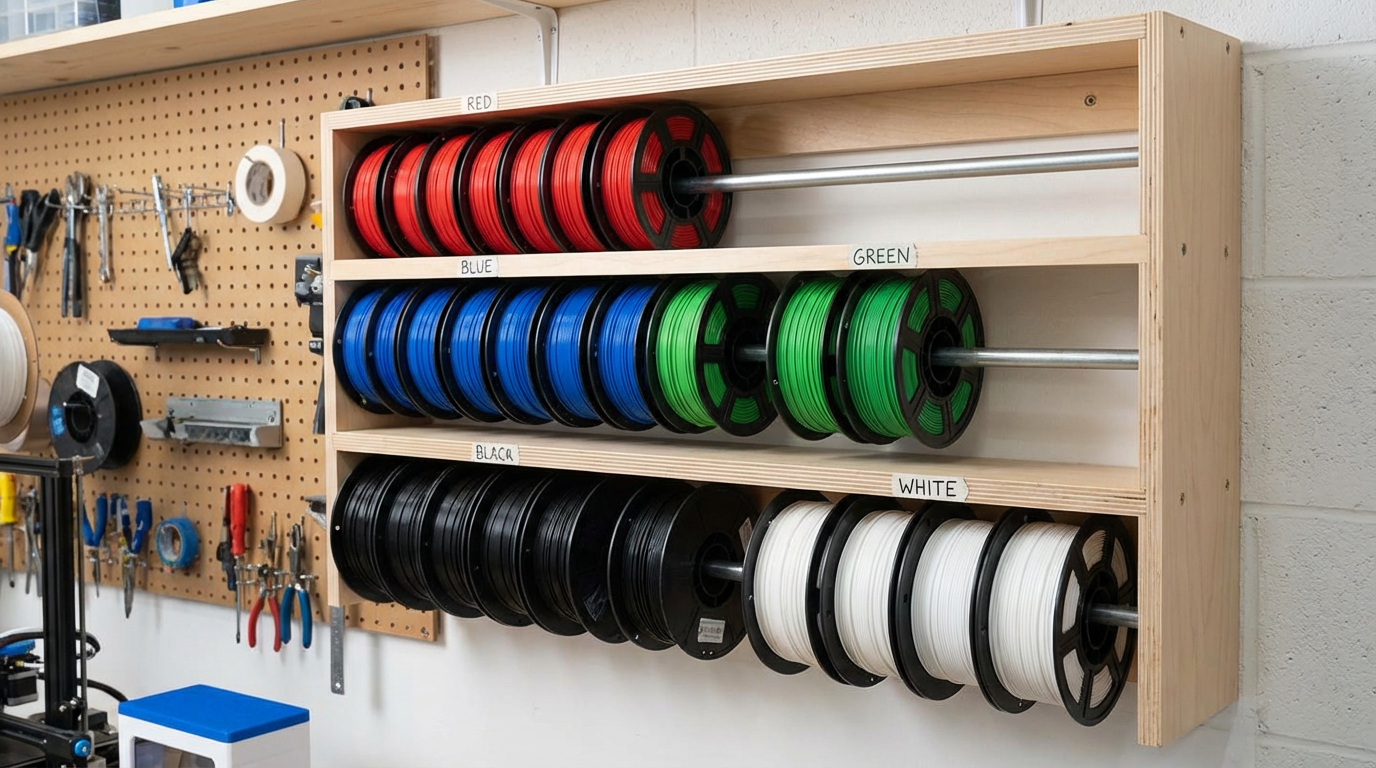
The biggest hidden cost in 3D printing is filament you never use. Spools buried in a drawer or mixed in a single pile become invisible. After organizing our workshop by color and material type on a dedicated shelf, we reduced duplicate purchases by roughly 30%. We now see at a glance what we have.
Simple system: one row per material (PLA, PETG, TPU), then sort by color. Put partial spools at the front so you finish them before opening new ones. A basic filament rack or wall-mounted dowels ($15–40) keeps spools visible. Label bins if you store sealed spools in plastic.
Keeping Filament Dry: Hygrometers, Silica Gel, Vacuum Bags
Wet PLA snaps when bent. Wet PETG strings and oozes. Nylon and polycarbonate absorb moisture fast. For PLA and PETG, an airtight bin with silica gel and a hygrometer ($5–15) is enough. Check the hygrometer weekly; if RH creeps above 50%, refresh the silica gel (reactivate in oven at 120°C for 2 hours) or add new packets.
- Hygrometers: Digital mini hygrometers cost $5–10 for a pack of 5. Place one in each storage bin.
- Silica gel: Reusable packets in bulk ($10–15). Indicator packs turn pink when saturated.
- Vacuum bags: For long-term storage of unopened spools, vacuum seal with desiccant. Prevents moisture until you’re ready to use.
- Airtight bins: Rubber gasket bins from IKEA, Sterilite, or similar. Avoid bins that don’t seal—humidity still gets in.
Small LCD hygrometers for bins and dry boxes. Readings every few minutes. Under $10 for five. Place one in each storage bin to monitor humidity without opening.
Amazon – Digital HygrometersBulk silica gel packets. Indicator type turns pink when saturated—reactivate in oven at 120°C for 2 hours. One kilogram covers multiple bins. Lasts years with proper care.
Amazon – Silica GelBins with rubber gasket lids. IKEA 365+ or Sterilite. Fit 2–4 spools each. Stack on wire shelving. Keeps humidity out when combined with desiccant.
Amazon – Airtight BinsWorkshop Flow That Saves Time
A good storage setup creates a flow: printer → shelf with spools → optional drying step → back to printer. Place the shelf within arm’s reach of the printer. Keep the current spool on a holder; the rest in bins or on the rack. When you finish a print, return the spool to its slot. That habit alone prevents the “where did I put the red PLA?” scramble.
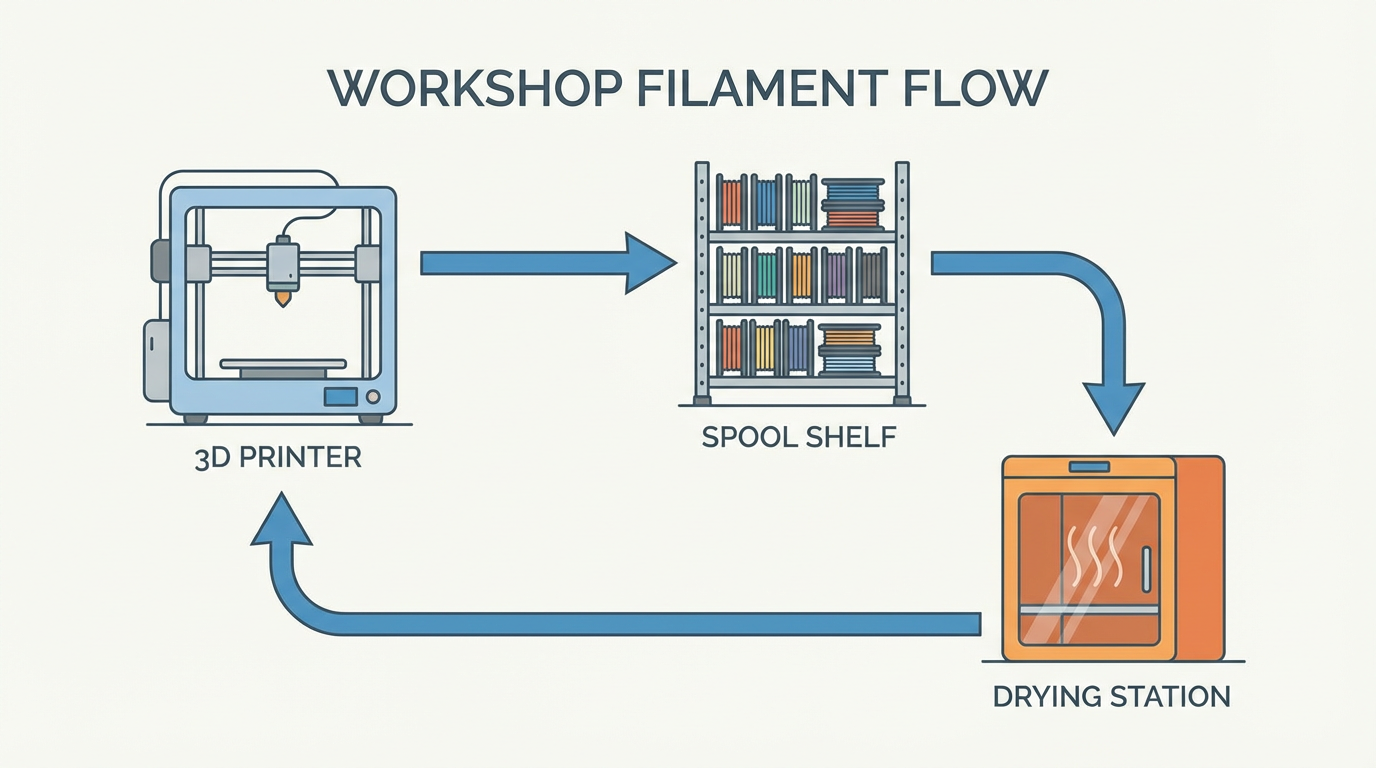
For nylon and other hygroscopic materials, add a filament dryer ($40–80) in the loop. Dry before printing, store in sealed bin after. PLA and PETG rarely need active drying if stored correctly.
Inventory Tracking and When to Check Prices
Knowing what you have prevents overbuying and helps you time purchases. A simple spreadsheet: spool name, color, material, weight left, and “low” flag. When a spool is under 300g or when you’re down to one spool of a color you use often, it’s time to check prices.
Our filament price comparison tool sorts by $/kg or €/kg. Filter by material and weight. Check when you’re about to run out—not when you’re desperate. Sales and deals come and go; having a list ready lets you grab them when they appear. See our PLA+ vs PLA guide for material choices and PLA recycle guide for handling waste from old spools.
For nylon, PC, and other hygroscopic filaments. Dries spool before printing. SUNLU and eSUN models run $40–60. Useful if you print nylon regularly; overkill for PLA-only.
Amazon – Filament DryerWall-mounted dowels or freestanding rack. Keeps spools visible and accessible. DIY with PVC or wood; commercial racks $15–40. Essential for color-based organization.
Amazon – Filament RacksFrequently Asked Questions
- What is the cheapest way to store 3D printer filament?
-
Short answer: A wire shelf ($25), airtight plastic bins ($5–15 each), silica gel ($10), and digital hygrometers ($5–10 for five) keeps 10+ spools dry for under $80.
Detailed: Commercial dry boxes cost $80–200 each. Passive storage with silica gel and sealed bins works for PLA and PETG in typical humidity. Add a room dehumidifier ($50–80) if you live somewhere humid. Total cost is a fraction of multiple dry boxes.
- Do I need a hygrometer for filament storage?
-
Short answer: Yes, for hygroscopic filaments and humid climates. Mini hygrometers cost $1–2 each.
Detailed: PLA and PETG tolerate 40–50% RH. Nylon and polycarbonate absorb moisture quickly and need drier storage. A hygrometer tells you when to refresh silica gel. Without one, you only discover wet filament when prints fail.
- How do I organize filament spools to reduce waste?
-
Short answer: Sort by material and color on a dedicated shelf. Put partial spools at the front. Track weights in a simple list.
Detailed: Forgotten spools are the main source of waste. A visible rack or shelf with spools by color and type lets you see what you have. Finish partial spools before opening new ones. A spreadsheet with remaining weight helps you know when to restock and check prices.
- Can I use vacuum bags for filament storage?
-
Short answer: Yes, for unopened spools. Add a desiccant pack before sealing.
Detailed: Vacuum bags keep moisture out for long-term storage. Ideal for spools you won’t use for months. Add silica gel or desiccant before sealing. For active use, airtight bins with hygrometers are more convenient—you can access spools without resealing.
- What humidity level is safe for PLA and PETG?
-
Short answer: Keep under 50% RH. PLA and PETG absorb moisture above that and print worse.
Detailed: PLA snaps when bent if wet. PETG strings and oozes. Both absorb moisture from air over days or weeks. Silica gel in airtight bins usually keeps RH under 40%. Check with a hygrometer; refresh desiccant when readings rise.
- Is a commercial filament dry box worth it?
-
Short answer: Only for nylon, PC, and humid environments. PLA and PETG are fine with cheap bins and silica gel.
Detailed: Dry boxes heat and circulate air, actively drying filament. Useful for nylon and polycarbonate, which absorb moisture fast. For PLA/PETG in normal humidity, passive storage is enough. A $50 shelf + bins setup beats a $150 dry box for most hobbyists.
- How often should I refresh silica gel in filament storage?
-
Short answer: When the hygrometer shows RH above 50%, or when indicator packets turn pink.
Detailed: Reactivate silica gel in an oven at 120°C for 2 hours. Let it cool before returning to the bin. In dry climates, every 2–3 months. In humid areas, monthly or more. Indicator packets change color when saturated.
- What is the best workshop layout for filament storage?
-
Short answer: Shelf within arm’s reach of the printer. Spools visible by color and type. Current spool on holder, rest in bins or rack.
Detailed: Flow: printer → shelf → optional dryer → printer. Keep the active spool accessible; return it to its slot when done. A simple rack or wall mount keeps everything visible. Out of sight means out of mind—and wasted filament.
Summary
3D printing storage on a budget is about organization and moisture control. A wire shelf, airtight bins, silica gel, and hygrometers cost under $80 and keep 10+ spools dry. Organizing by color and type prevents forgotten filament waste. Track what you have so you know when to check our filament price comparison for the next deal.
Commercial dry boxes make sense for nylon and PC or very humid climates. For PLA and PETG, passive storage works. Start with a simple shelf and bins, add a hygrometer to each, and refresh silica gel when RH rises. Your filament will last longer and you’ll waste less.
Article Update History
- Feb 2026: Initial publication. DIY vs commercial storage, organization by color, humidity control, workshop flow, inventory tracking.
Stop overpaying for 3D filament!
Compare brands and save today. Our tool shows real prices from Amazon, Ebay, AliExpress and manufacturer stores.
Compare brands & save today