Resin Vat Cleaning Tools and Supplies. Complete Kit Guide
What to buy for resin vat cleaning. IPA, filters, microfiber, gloves, scrapers, UV flashlight. Essential kit under 60 dollars.
Compare prices & save today
Sort by $/kg, filter by PLA, PETG, ABS. Real prices from Amazon, Ebay & AliExpress and manufacturer stores—find the cheapest filament in seconds.
CompareVat cleaning fails when the wrong tool meets the wrong situation. This guide helps you choose wisely and avoid the mistakes that waste money and shorten FEP life. Less about what to buy, more about what actually works and when it matters.
For the cleaning process itself, see our 5 minute vat cleaning method or exposure settings by printer. Here we focus on the choices that affect your results and your wallet.
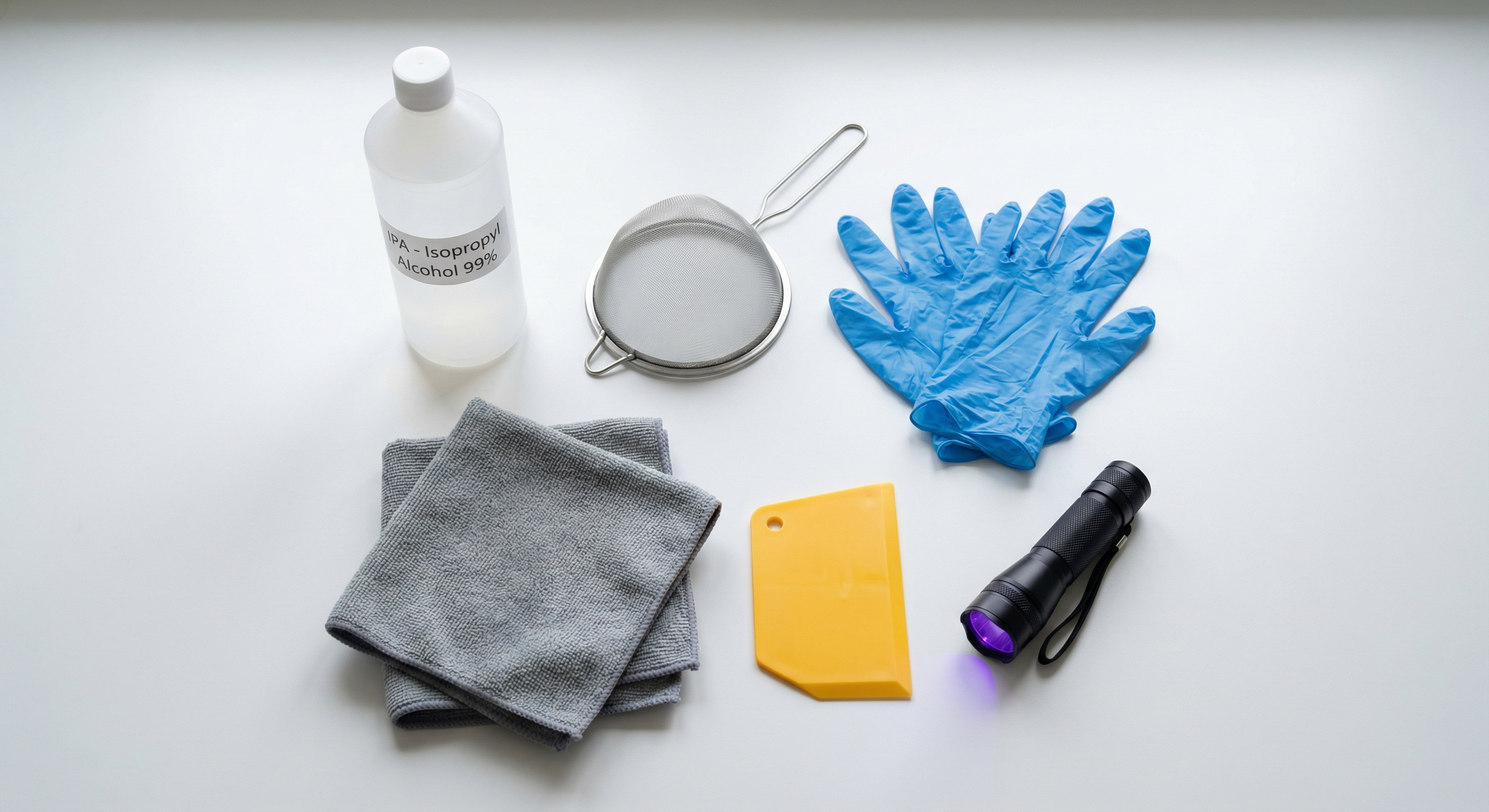
What Actually Matters for Clean Vats
The biggest factor in vat cleaning success is not the brand of IPA. It is using clean IPA for the final wipe. Contaminated alcohol leaves a film that cures under UV and creates a hazy layer on your next print. Many people blame the resin or the printer when the real culprit is dirty wash liquid. Keep one bottle for initial rinses and one for the final pass. Or use fresh IPA from a dedicated jug for the last wipe. This single habit prevents most post clean print failures.
The second factor is never touching FEP with anything abrasive. Paper towels, even the soft ones, leave micro scratches. Each scratch scatters UV light and creates a dim spot on your LCD exposure. Over time those spots add up to failed layers and mysterious print defects. A pack of lint free microfiber cloths costs a few dollars and lasts months. Dedicate them to resin work only. Do not use them for anything else. If you already ruined a cloth with resin, wash it separately and accept that it may never be perfectly clean again.
The third factor is filtering. Every time you pour resin back into the bottle, run it through a strainer. Cured bits, support fragments, and debris will otherwise land on your FEP and get baked into the next print. A 125 micron paint strainer catches almost everything. One failure from a stray particle costs more in resin and time than an entire box of strainers. Pre filtering fresh resin before the first pour is optional but catches manufacturer debris. It prevents a surprising number of first layer failures.
125 micron paint strainers. Filter every pour back into the bottle. A 50 pack lasts months and prevents most contamination failures.
Amazon, Resin FiltersIPA. Concentration and Reuse
Ninety percent works. Ninety five or ninety nine works better. The difference is evaporation speed and residue. Lower concentration IPA has more water. Water does not dissolve resin. It stays on the FEP and dries into streaks. For FEP cleaning, higher is better. For washing prints in a bath, ninety percent is fine. The key is to never use IPA that looks cloudy or has floating bits for your final FEP wipe. If your wash bath is dirty, pour it out or use it only for initial rinses. Reserve fresh IPA for the step that touches the film.
Reusing IPA is possible. Pour used IPA through a filter into a second container. Use that for first passes. Over time it will yellow and lose effectiveness. When it stays cloudy after filtering, discard it. Do not try to extend its life by diluting with fresh IPA. Contaminated liquid contaminates clean liquid. The cost of a gallon of 99 percent IPA is roughly 20 dollars. It lasts 50 to 100 prints. The cost per print is negligible. Skimping here causes more problems than it saves.
One gallon for FEP cleaning and print washing. Higher concentration evaporates faster and leaves less residue. Keep a spray bottle filled for vat work.
Amazon, IPAWhen to Scrape and When Not To
Stuck resin on FEP tempts you to scrape. Scraping often makes things worse. Cured resin that is stuck usually just needs more curing. Flip the vat upside down, expose the piece to UV for 60 to 90 seconds, then flex the vat gently from underneath. The resin shrinks slightly when fully cured and releases. A UV flashlight makes this fast. Sunlight works but takes longer. A UV nail lamp works. No scraping means no new scratches. If you must scrape, use plastic only. Metal of any kind will damage the FEP. A plastic spatula from the kitchen works. Hold it at a shallow angle and push away from you. One deep gouge from a metal tool can ruin the entire film.
Cure stuck resin in place. Shine 60 to 90 seconds, then flex the vat. The piece pops off. No scraping, no FEP damage. Worth it if you get failed prints.
Amazon, UV Flashlight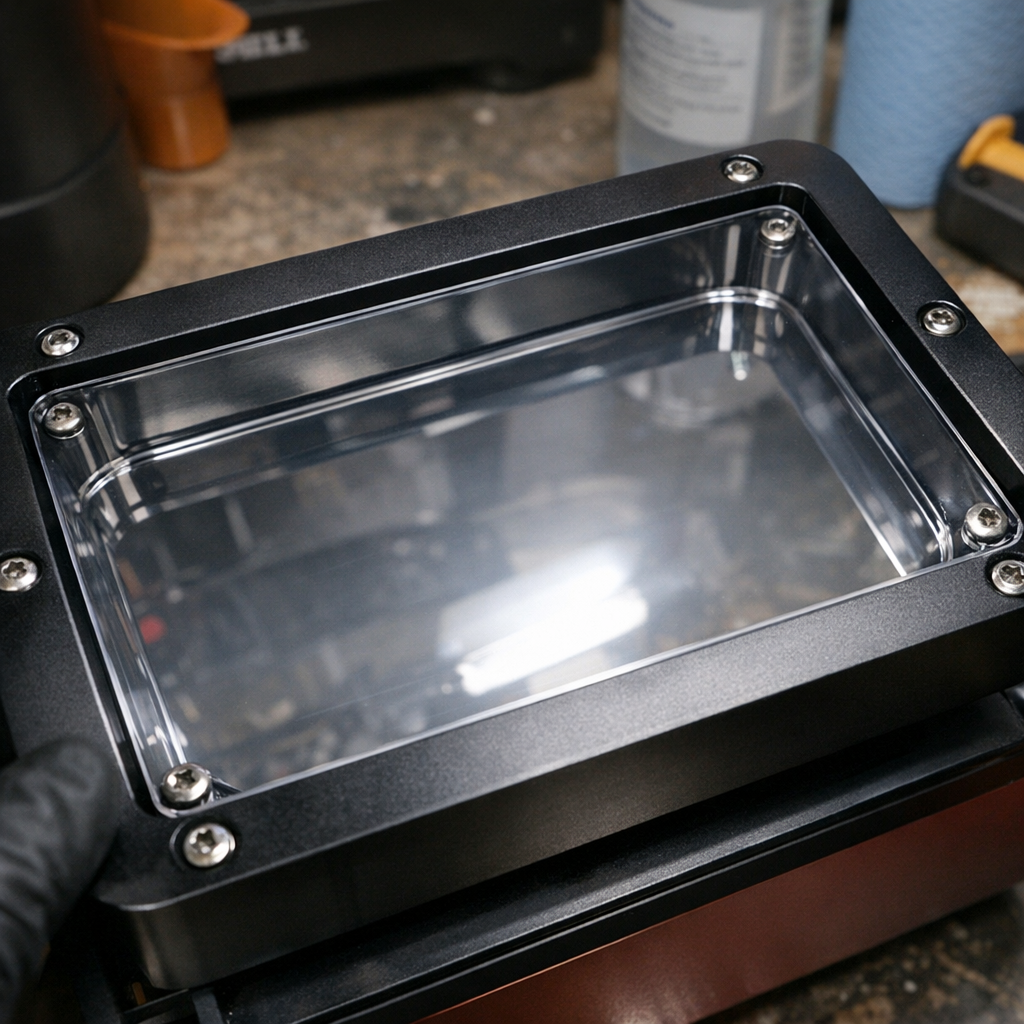
The Minimal Kit That Works
You need IPA, something to filter resin, something to wipe FEP that is not paper, gloves, and optionally a plastic scraper for rare cases. A spray bottle for IPA saves product and applies it evenly. You do not need a wash and cure station for vat cleaning. You do not need a second vat unless you switch resins constantly. You do not need a UV flashlight if you rarely get failed prints. Buy the basics first. Use them for a month. Then decide if the upgrades justify the cost. A UV flashlight pays for itself if you get one stuck print per month and it saves you from replacing a scratched FEP. A spare vat pays for itself if you switch between grey and clear every few days and hate cleaning between. Otherwise skip them.
One more thing that gets overlooked. A chemical resistant spray bottle. The cheap ones from the dollar store often degrade with IPA. The seals swell and leak. A proper bottle labeled for IPA costs a few dollars and lasts years. Label it clearly. Never use it for water or anything else. Resin residue in a spray bottle will contaminate your next IPA spray.
What to Skip or Avoid
- Acetone. It dissolves cured resin faster than IPA but it attacks FEP. The film clouds and weakens. IPA only.
- Compressed air. Blows debris into corners and under the vat frame. Wipe instead.
- Heavy duty gloves. Thick nitrile reduces feel. You need dexterity for vat work. Medium weight works.
- Fancy filter systems. A simple paint strainer does the job. Multi stage filtering is overkill for most users.
- Paper towels anywhere near FEP. Even on the vat frame, fibers can fall onto the film. Microfiber for everything that touches the vat interior.
Extending FEP Life
FEP lasts 2 to 6 months depending on use. Heavy printing, frequent failures, and abrasive cleaning shorten it. Gentle wiping in straight lines instead of circles reduces swirl marks. Letting IPA sit for 30 seconds before wiping dissolves uncured resin so you rub less. Avoiding scrapers when possible prevents gouges. Keep a spare FEP on hand. When you need it you need it now. Printer downtime while waiting for a replacement costs more than the film. Match the FEP to your printer model. Generic film may not fit or may have different thickness. Check your manufacturer specs.
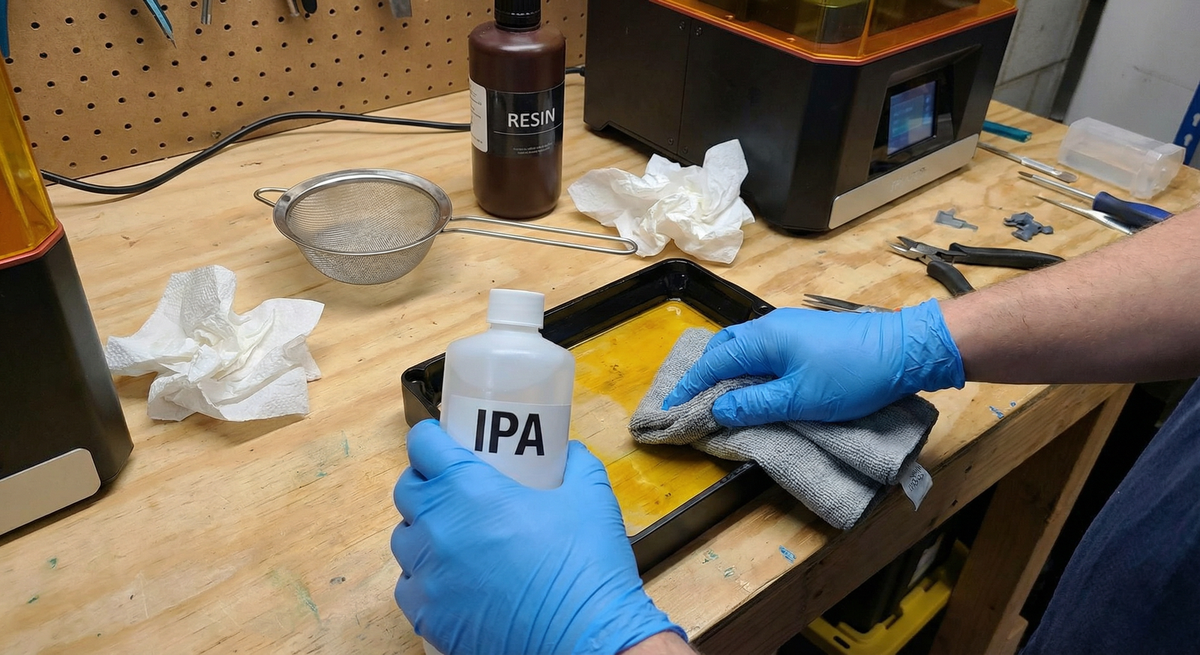
Supplies Reference
Total for the essentials runs about 40 to 60 dollars and lasts 2 to 4 months of regular printing. Microfiber and nitrile gloves round out the kit. Keep spare FEP for your printer model. When you need it you need it now.
Never use paper towels on FEP. Microfiber only. Dedicate a few cloths to resin work. Wash separately if you reuse them.
Amazon, MicrofiberResin is a skin irritant. Nitrile holds up better than latex. Medium weight balances protection and dexterity.
Amazon, Nitrile GlovesMatch your printer model. FEP lasts 2 to 6 months. Cloudiness, holes, sag mean replace. Printer downtime costs more than the film.
Amazon, FEP FilmFrequently Asked Questions
- What IPA concentration for vat cleaning?
- 90% or higher. 95% and 99% work best. Lower concentration evaporates slower and leaves more residue on FEP.
- Can I reuse IPA after vat cleaning?
- Yes for initial washes. For the final wipe on FEP, use fresh IPA. Contaminated IPA leaves streaks that affect print quality.
- How often should I replace FEP film?
- Heavy use every 2 to 3 months. Regular use 4 to 6 months. Replace immediately if you see holes, deep scratches, or cloudiness that does not clear.
- Do I need a UV flashlight?
- Not essential. It helps if you get failed prints often. Cures stuck resin without scraping. Prevents FEP damage from scrapers. Skip it if failures are rare.
- Paper towels or microfiber for FEP?
- Microfiber only. Paper towels scratch FEP. Use lint free microfiber. Dedicate cloths to resin work only.
Stop overpaying for 3D filament!
Compare brands and save today. Our tool shows real prices from Amazon, Ebay, AliExpress and manufacturer stores.
Compare brands & save today