PLA Recycle. What Actually Works for 3D Printing Waste
Municipal recycling rejects PLA. Industrial composting is rare. DIY extruders exist. Honest guide to disposal and recycling options.
Compare prices & save today
Sort by $/kg, filter by PLA, PETG, ABS. Real prices from Amazon, Ebay & AliExpress and manufacturer stores—find the cheapest filament in seconds.
ComparePLA recycle sounds straightforward. The plastic comes from corn, carries a recycling symbol, and brands call it biodegradable. The reality is different. Most municipal recycling programs do not accept PLA. Industrial composting exists but is rare. DIY recycling works if you invest in equipment. This guide explains what actually happens and what you can do. For material comparison, see our resin vs filament guide.
If you print with filament, you generate scraps, failed prints, and support material. PLA is the most common choice for beginners and prototypes. Understanding how to handle PLA waste helps you make informed choices. We researched municipal programs, DIY extruder costs, and mail-back options. Here is what we found.
Why PLA Recycling Is Complicated
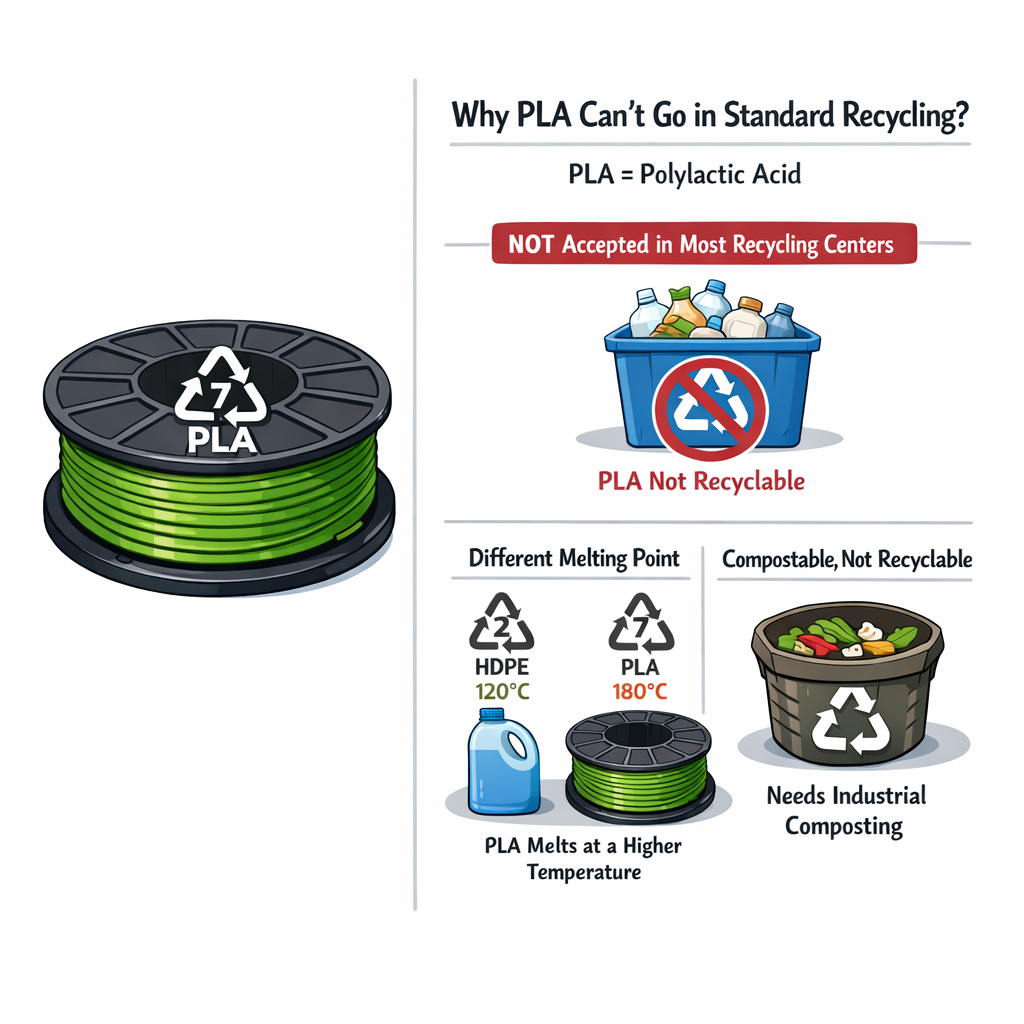
PLA (polylactic acid) is made from fermented plant starch, usually corn or sugarcane. It melts at 160–180°C, lower than PET or HDPE. That difference is the problem. Municipal recycling sorts by plastic type. PET bottles melt at different temperatures than PLA. When PLA gets mixed into a PET batch, it contaminates the entire load. One spool of PLA waste can ruin tonnes of recycled plastic. Most facilities reject PLA on sight or filter it out to landfill anyway.
The recycling symbol on filament spools is usually a 7 inside a triangle. Code 7 means other plastics. It does not mean your local program accepts it. Check your municipality. In the US and Europe, the vast majority of curbside programs do not take PLA. Putting it in the blue bin causes more harm than good. For the science behind PLA and other materials, HP's 3D plastics recycling overview summarizes the challenges.
Biodegradable Does Not Mean Curbside
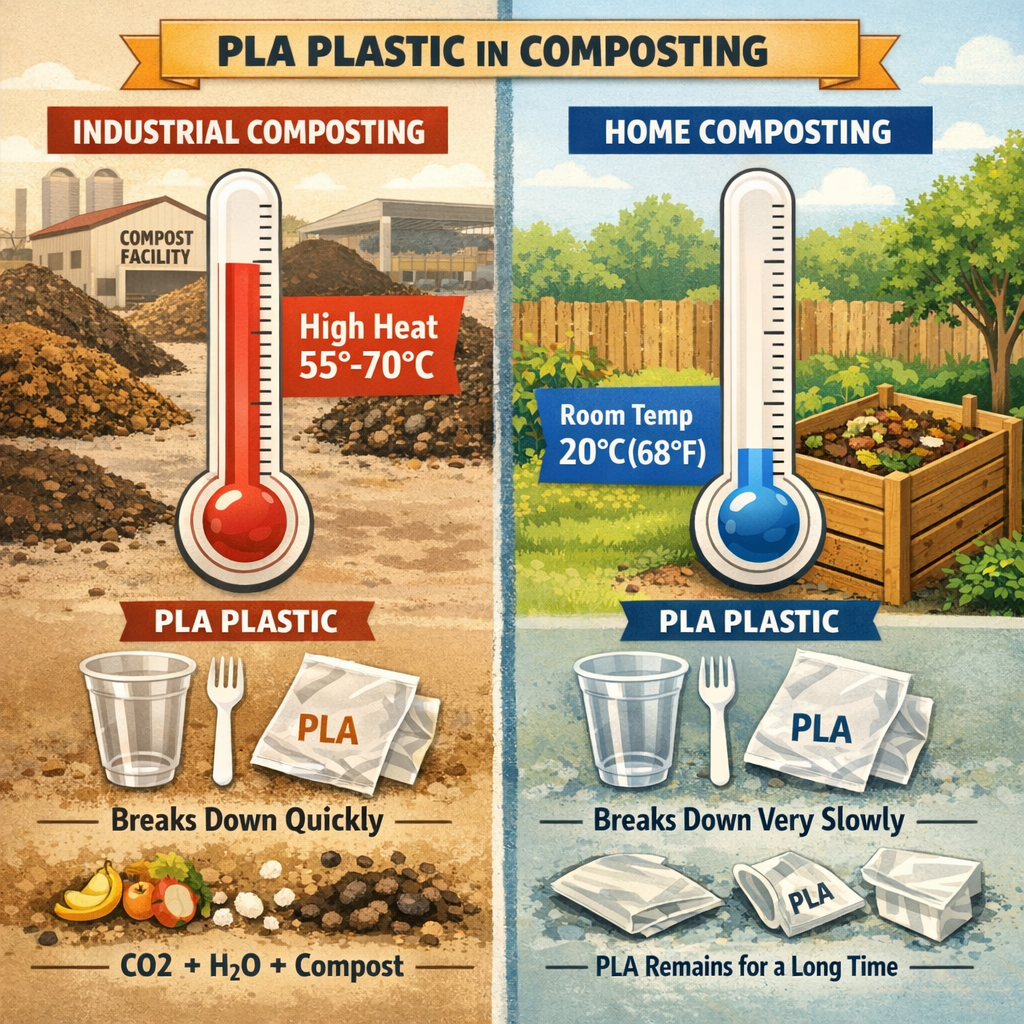
PLA breaks down under specific conditions. Industrial composting requires 55–70°C for 180 days or more. Home compost heaps rarely exceed 35°C. PLA in a backyard bin can take years. Many home composters report PLA pieces intact after 12 months. Industrial composting facilities exist but they are not widespread. They accept food scraps and certified compostable packaging. PLA filament is rarely on the list. Even when accepted, mixed colors and additives can slow or prevent decomposition.
Skip the green bin unless you have confirmed your facility takes PLA. Calling your waste management provider takes five minutes and saves contamination. If they say no, you have a clear answer. If they say yes, ask how to prepare it. Some want it shredded or separated from other plastics.
DIY PLA Recycling. Extruders and Grinders
You can turn PLA scraps back into filament. The process requires a grinder or shredder and a filament extruder. Grinders reduce prints to pellets or chips. Extruders melt the material and push it through a die to form filament. Desktop systems exist. Filabot sells the EX2 and EX6 extruders plus pelletizers. Other manufacturers sell desktop extruders for makerspaces and small labs. Costs range from 400 to 2000+ dollars. Quality depends on consistent feedstock. Mixed colors produce grey or brown filament. Dirty or degraded PLA causes jams and weak spots.
Skip DIY recycling if you print occasionally. The payoff takes hundreds of hours of waste. A hobbyist might fill a 5-gallon bucket in a year. That is roughly 1–2 kg of PLA. At 15 dollars per kg for virgin filament, you save 15–30 dollars annually. The extruder pays for itself in a decade or never. DIY makes sense for makerspaces, schools, or high-volume users who generate 10+ kg per month. Filabot EX2 retails around 1,500 dollars. DIY kits start around 400. The math rarely works for casual printers.
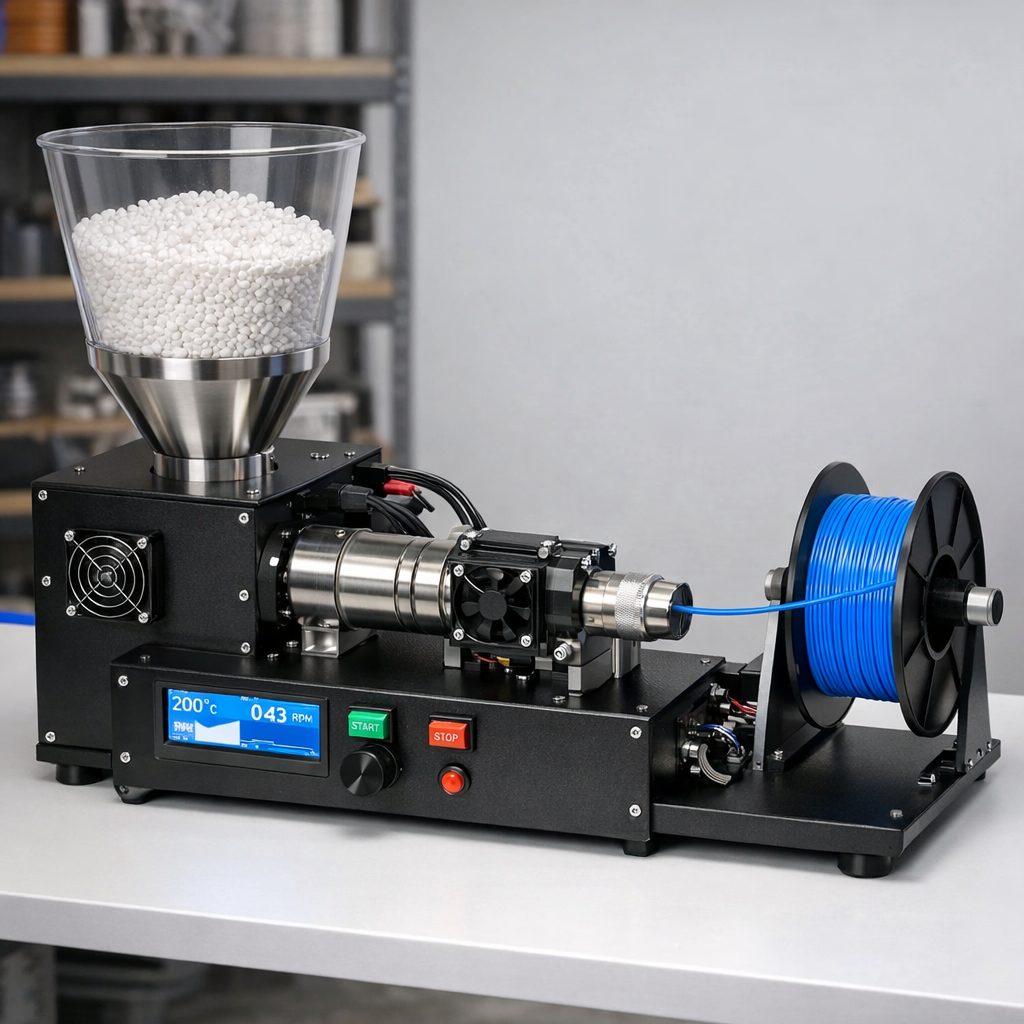
Reduces failed prints and scraps to uniform chips before extrusion. Required for most filament recyclers.
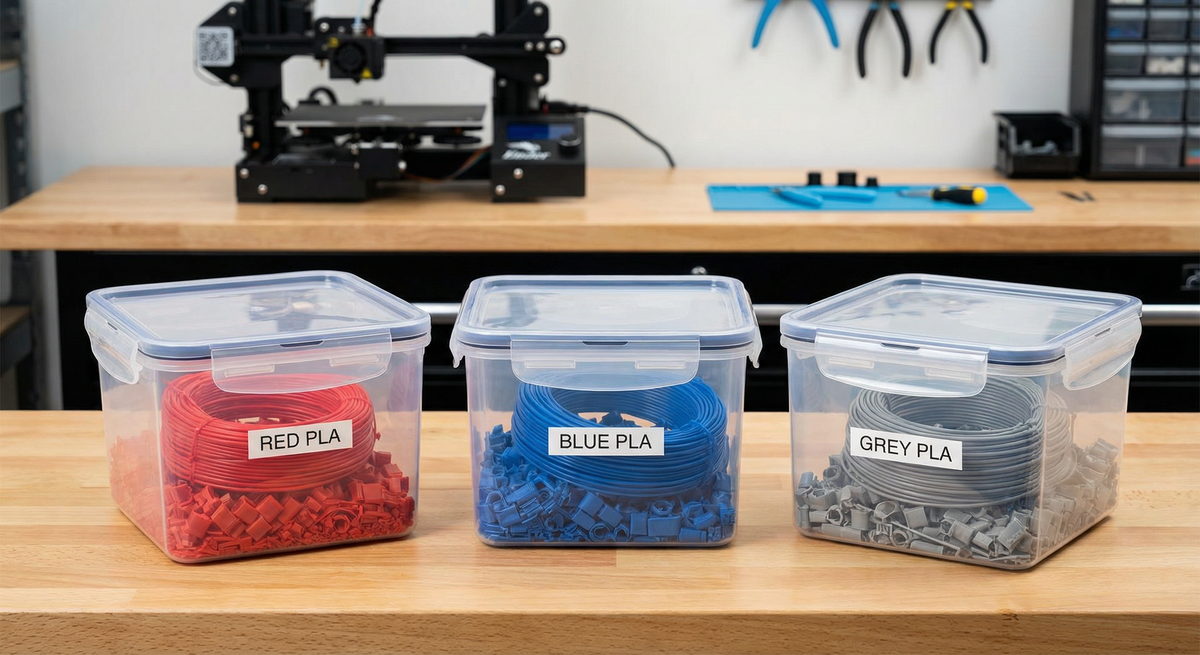
Amazon, Plastic ShredderKeep scraps dry and sorted by color. Moisture degrades PLA before extrusion. Separate bins prevent mixed grey output.
Amazon, Storage BinsPLA absorbs moisture. Dry scraps 4–6 hours at 50–60°C before extruding. Wet PLA causes bubbles and weak filament.
Amazon, DehydratorMail-Back and Drop-Off Programs
Some companies and institutions collect PLA for recycling. UC Berkeley runs a filament reclamation program that granulates, dehydrates, and extrudes PLA from campus labs. The result is tested for quality. Similar initiatives exist at other universities. Check if your local makerspace or university has a program. TerraCycle has partnered with brands for plastic waste mail-back. PLA-specific programs are rarer. Filabot used to offer a recycling service. Availability changes. Search for 3D printing recycling plus your city or region.
When you find a program, ask what they accept. Clean PLA only or mixed with PETG? Supports and rafts or solid prints? Preparation requirements matter. Some want material shredded. Others accept whole pieces. Sending unprepared waste can get it rejected.
Reduce Waste Before Recycling
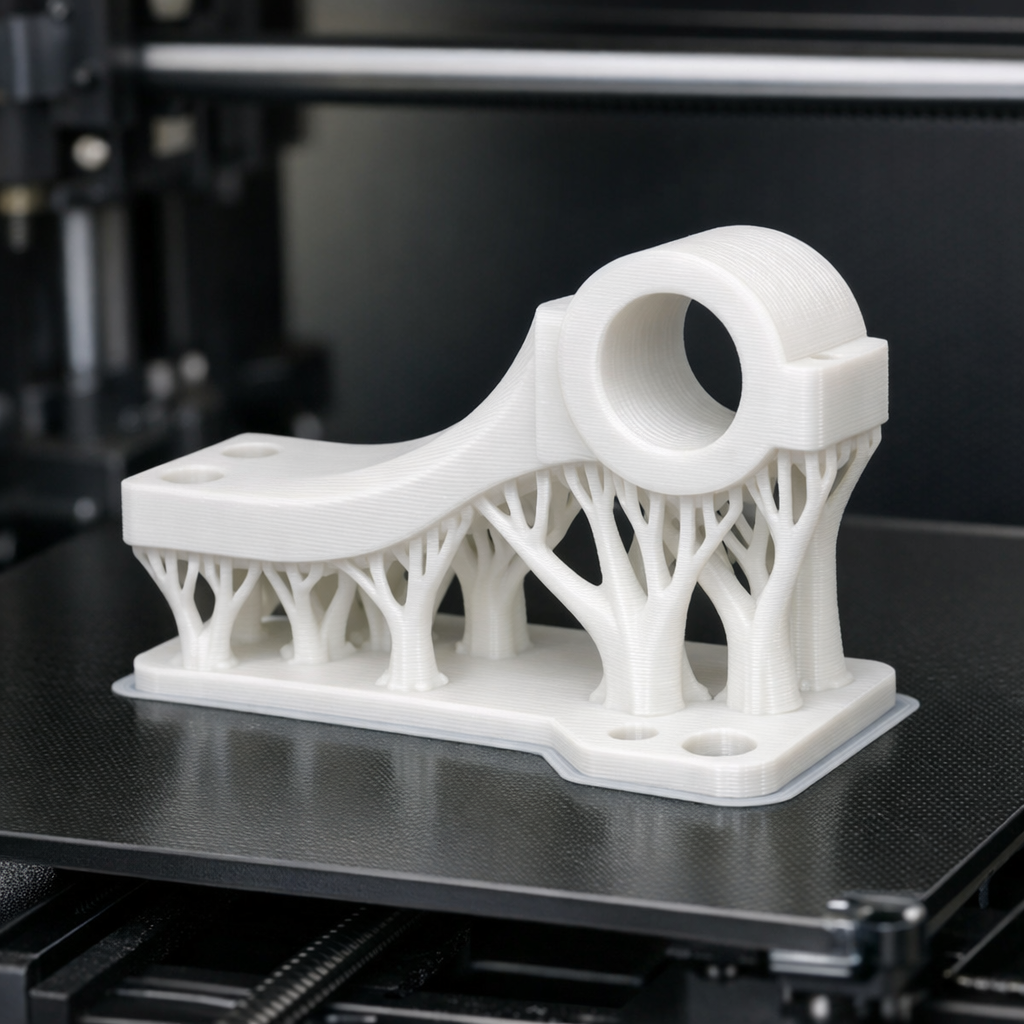
The most effective approach is to generate less. Optimize support settings in your slicer. Tree supports use 30–50% less material than standard supports in many cases. Orient parts to minimize supports. Hollow models when strength is not critical. A 20% infill print uses far less filament than 100% solid. Reuse support material for non-critical prints. Calibration prevents failed prints. A well-tuned printer wastes less. Our resin vs filament guide covers workflow differences. For resin, waste is liquid and curable. For filament, waste is solid and harder to reprocess. Prevention pays more than recycling for most users.
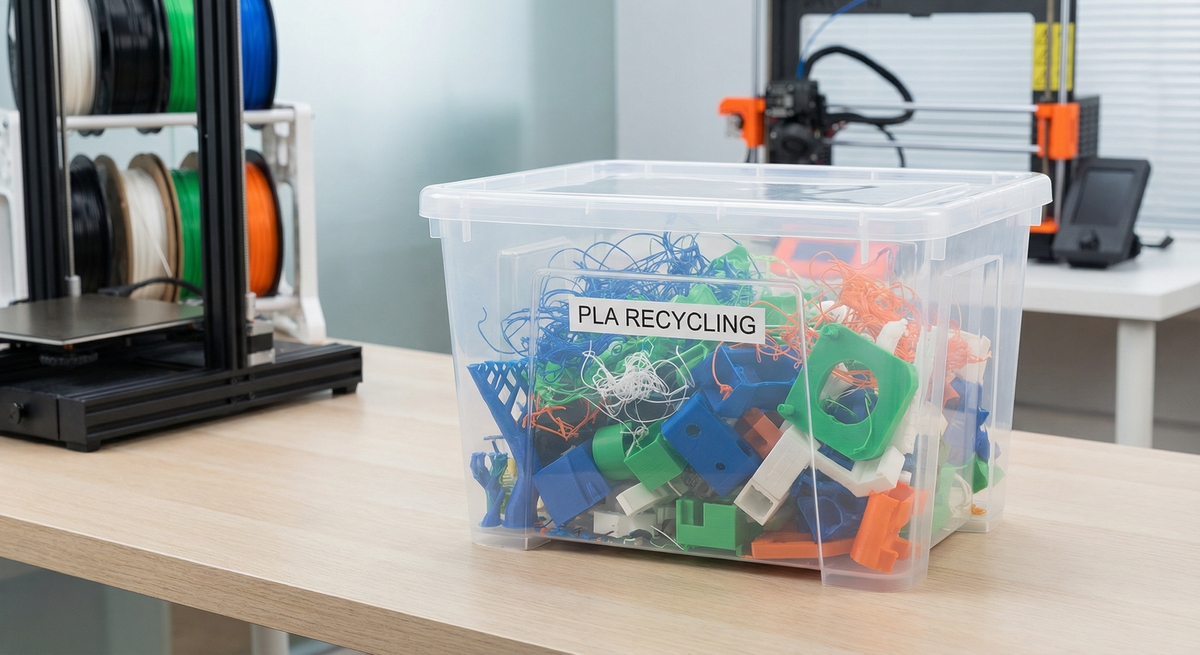
Pro tip: Store failed prints and scraps in a dedicated bin. Even if you do not recycle now, programs may appear in your area. Clean, sorted PLA has value. Contaminated or mixed material does not.
PLA Disposal Options at a Glance
| Option | Effort | Cost | Best For |
|---|---|---|---|
| Curbside recycling | Low | Free | Almost nobody. Check your municipality first. |
| Industrial composting | Low | Free or fee | Rare. Only if facility explicitly accepts PLA. |
| Store for programs | Low | Free | Everyone. Keep clean scraps until a program exists. |
| DIY extruder | High | 400–2000+ dollars | Makerspaces, schools, high-volume users. |
| Mail-back program | Medium | Shipping cost | If one serves your region. |
| Landfill | Low | Free | Default when no program exists. Not ideal but honest. |
PETG, ABS, and Other Filaments
PETG is chemically modified PET. Do not put it in PET bottle recycling. It contaminates the stream. ABS and ASA release styrene when melted. Recyclers avoid them. TPU and nylon have no standard recycling path. Each material needs separate handling. Mixing PLA with PETG or ABS in a DIY extruder ruins the output. If you recycle at home, keep materials strictly separated. For a broader view of materials, our best resin printers guide covers resin waste handling. Resin requires UV curing before disposal. Filament does not. The workflows differ.
Troubleshooting PLA Recycling
- Extruder jams or bubbles: PLA absorbs moisture. Dry scraps in a food dehydrator or oven at 50–60°C for 4–6 hours before extruding. Wet PLA turns foamy and weak.
- Filament diameter inconsistent: Cheap extruders have poor control. Feed rate and temperature affect diameter. Consistency improves with practice and calibration.
- Recycled filament brittle: PLA degrades with multiple heat cycles. First recycle is usually fine. Second or third pass weakens the polymer. Blend with virgin PLA to improve strength.
- Program says no to my PLA: Ask why. Contamination, mixed materials, or preparation. Clean PLA only, single color, and proper packaging often fix rejections.
- No program near me: Store scraps. Advocate at makerspaces or schools. Some start programs when they see demand.
Bottom Line on PLA Recycle
Most PLA ends up in landfill. Curbside recycling rejects it. Industrial composting is rare. DIY recycling costs 400 to 2000+ dollars and pays off only at high volume. The best move is to reduce waste first. Optimize supports, calibrate your printer, store scraps cleanly for when programs appear. Check your municipality. Search for makerspace programs. If nothing exists, landfill is the honest default. For resin waste handling, see our 5 minute vat cleaning method and best resin printers guide. Compare filament prices on our main site.
FAQ
- Can I put PLA in my curbside recycling?
-
Short answer: Probably not. Most municipal programs do not accept PLA.
Detailed: PLA contaminates PET and HDPE batches because it melts at different temperatures. One spool of PLA waste can ruin tonnes of recycled plastic. Check with your local waste authority. When in doubt, do not put it in the recycling bin.
- Is PLA biodegradable?
-
Short answer: Only under industrial composting conditions, not in home compost.
Detailed: PLA breaks down at 55–70°C for 180 days or more. Home compost heaps rarely exceed 35°C. PLA in a backyard bin can take years. Many report pieces intact after 12 months. Biodegradable does not mean toss it anywhere.
- Can I recycle PLA at home?
-
Short answer: Yes, with a grinder and filament extruder. Systems cost 400 to 2000+ dollars.
Detailed: Quality varies with feedstock consistency. Mixed colors produce grey or brown filament. Makes sense for makerspaces, schools, or users generating 10+ kg per month. Hobbyists who print occasionally rarely recover the investment.
- How much PLA waste does a hobbyist generate?
-
Short answer: Roughly 1–2 kg per year for casual printing.
Detailed: A 5-gallon bucket of failed prints and supports holds about 1–2 kg. At 15 dollars per kg for virgin filament, annual savings from recycling are 15–30 dollars. A 1,500 dollar extruder pays for itself in 50+ years at that rate.
- Why does recycled PLA filament get brittle?
-
Short answer: Heat breaks polymer chains. Each melt cycle weakens PLA.
Detailed: First recycle is usually fine. Second or third pass reduces strength. Blend 50% virgin PLA with recycled to improve durability. Store recycled filament dry. Moisture worsens brittleness.
- Should I separate PLA by color before recycling?
-
Short answer: Yes. Single-color scrap gives predictable results.
Detailed: Mixed colors produce grey or brown filament. Store in separate bins by color. Clean material has more value to recyclers and improves DIY extruder output consistency.
- What about PLA support material?
-
Short answer: Supports are the same material. Include them when recycling.
Detailed: Shred or grind to uniform size before extrusion. Remove any non-PLA bits like purge tabs from filament changes. Contamination causes jams and weak spots in recycled filament.
- Is it worth buying a filament extruder?
-
Short answer: Only if you generate 10+ kg of PLA waste per month.
Detailed: Filabot EX2 costs about 1,500 dollars. DIY kits start around 400. For occasional printers, the payoff takes decades. Makerspaces, schools, and print farms can justify the investment.
- Where can I find PLA recycling programs?
-
Short answer: Search for 3D printing recycling plus your city, university, or makerspace.
Detailed: UC Berkeley runs a filament reclamation program. Similar initiatives exist at other universities. TerraCycle partners with brands for plastic mail-back. Programs change. Store clean scraps until you find one.
- What is the best way to store PLA scraps for recycling?
-
Short answer: In airtight bins, sorted by color, kept dry.
Detailed: Moisture degrades PLA before extrusion. Use separate bins per color. Label clearly. Remove support structures from failed prints but keep the PLA. Contaminated or mixed material has little value.
Stop overpaying for 3D filament!
Compare brands and save today. Our tool shows real prices from Amazon, Ebay, AliExpress and manufacturer stores.
Compare brands & save todayTransparency: This article contains Amazon affiliate links. We earn from qualifying purchases at no extra cost to you. Recommendations are based on research and usability. We only link to products we would use ourselves.