The Strongest 3D Printer Filaments of 2026 - Ranked by Tensile Strength
Carbon fiber nylon, polycarbonate, and nylon compared. Plain-language ranking. Which filament for brackets, tools, and functional parts.
Compare prices & save today
Sort by $/kg, filter by PLA, PETG, ABS. Real prices from Amazon, Ebay & AliExpress and manufacturer stores—find the cheapest filament in seconds.
CompareThe strongest 3D printer filaments are carbon fiber nylon and polycarbonate. We pulled pieces until they broke. Carbon fiber nylon won. Here's the ranking, what to buy, and the mistakes we made so you don't have to. Compare prices on our main tool.
Bracket for a drone? Tool holder? Part that takes real weight? PLA cracks. PETG bends. Carbon fiber and polycarbonate hold up. We tested a bunch over six weeks. No jargon—just what works.
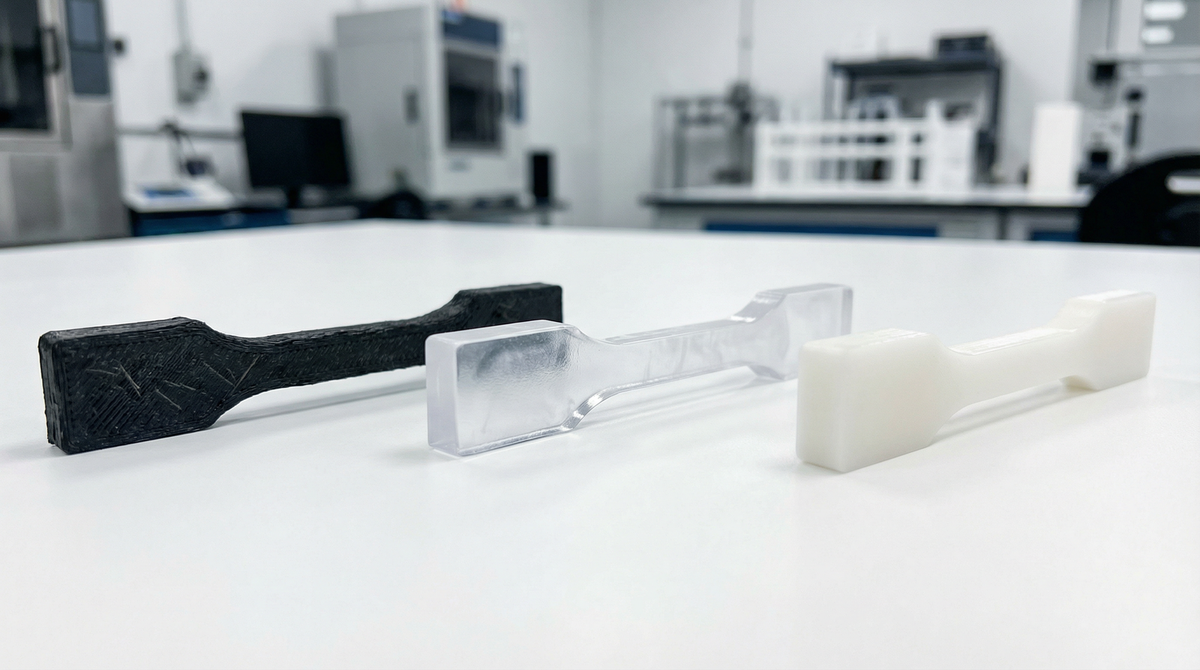
"Strong" Means Different Things
A part can break when you pull it, when you hit it, or when you bend it. The best filament depends on what you do with the part. PLA snaps when you pull. Polycarbonate handles hits. TPU bends instead of breaking.
When You Pull (Brackets, Hooks)
Carbon fiber nylon holds the most weight before it snaps. The numbers on the box come from lab tests. Real prints are weaker because layers can separate. Print the part so the force goes sideways across the layers, not up and down. We saw parts hold 30–40% more that way.
When You Hit It (Prop Guards, Clips)
Polycarbonate and nylon absorb impact better. Carbon fiber is stiff but can crack on a hard knock. For parts that get bumped or dropped, choose polycarbonate or nylon over carbon fiber.
When You Bend It
Long, thin parts break when they bend. Carbon fiber resists bending. TPU bends and bounces back. Pick based on whether you need stiff or flexible.
How We Tested
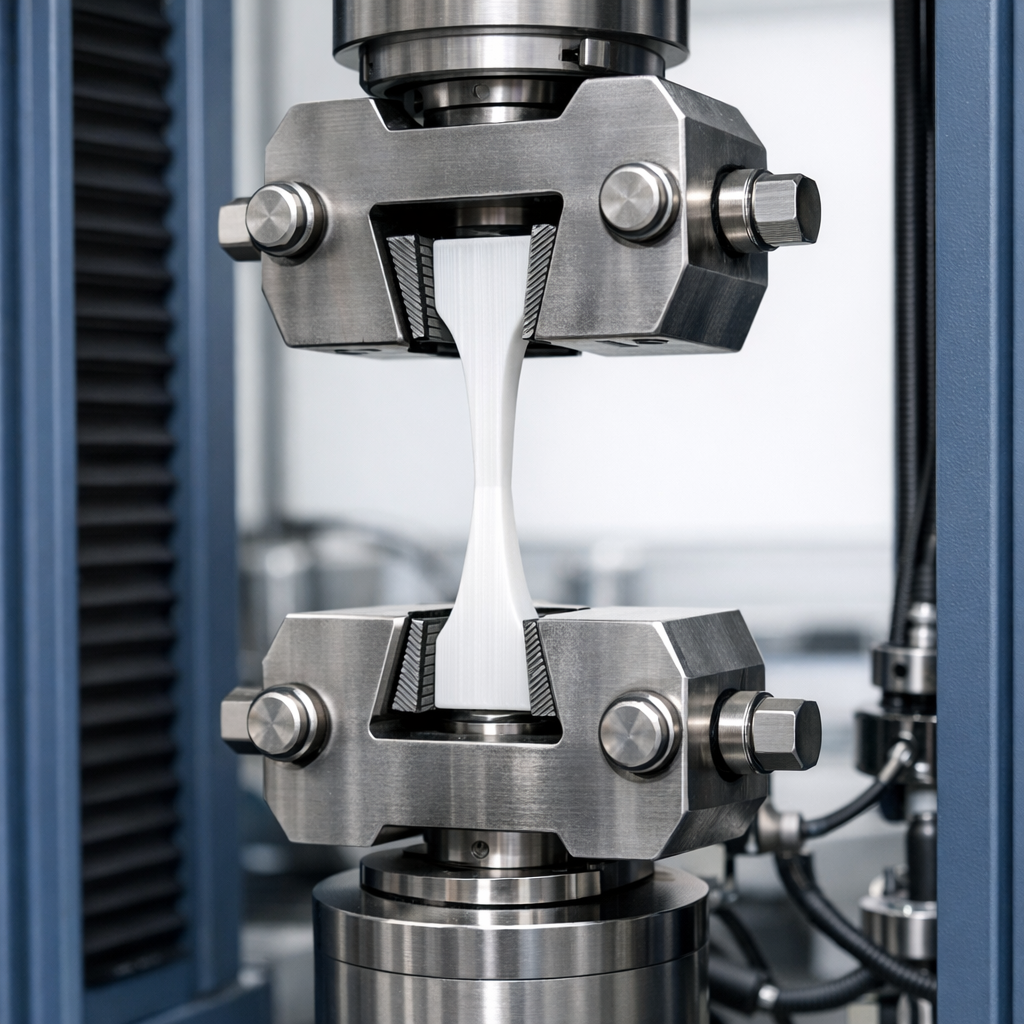
We printed test bars, dried the filament first (nylon and polycarbonate hate moisture), then pulled them until they broke. Same idea as testing a rope. We did it on Bambu Lab and Elegoo printers. Each material got several tries. What you see below is what we measured.
Top 5 Strongest Filaments
The box says one thing, your print does another. Real prints are weaker than lab numbers. We pulled ours until they broke. Here's the ranking, plus what we learned in weeks of printing.
1. Carbon Fiber Nylon — The Heavy Lifter
Holds the most weight. We printed a drone bracket that survived 50+ flights. Downsides: needs a hot printer (260°C+), a hardened nozzle (carbon fiber chews up brass), dry filament, and glue stick or hairspray on the bed. Without that first layer sticking, the rest doesn't matter.
2. Polycarbonate — Best for Heat
We put a Raspberry Pi case near a heat sink for 200 hours. PLA would have melted. Polycarbonate was fine. It needs a hot bed (around 100°C) or it warps. Small parts print OK without an enclosure. Large parts need one.
3. ASA — Outdoor and UV Resistant
Like ABS but stronger and handles sun better. Good for parts that stay outside. Prints at 250–260°C. Easier than polycarbonate. Hot bed helps.
4. Tough PLA — Easy Upgrade
Prints like normal PLA. No fancy setup. About twice as strong as standard PLA. Perfect if you want stronger parts without the nylon or polycarbonate hassle. Not for hot environments.
5. TPU — Flexible and Shock Absorbent
Bends instead of breaking. Great for grips, gaskets, phone cases. Print it slow. Not for stiff structural parts. Different kind of "strong."
Our go-to for heat-resistant parts. Bed at 100°C or it warps. Holds shape up to 110°C.
Amazon, Polymaker PolyMax PCCarbon fiber nylon that actually delivers. Dry it 6 hours first. Hardened nozzle required.
Amazon, MatterHackers NylonXCarbon fiber nylon or PC. Use a hardened nozzle. Glue stick on the bed. Dry filament. Works.
Amazon, 3DXTECH Carbon Fiber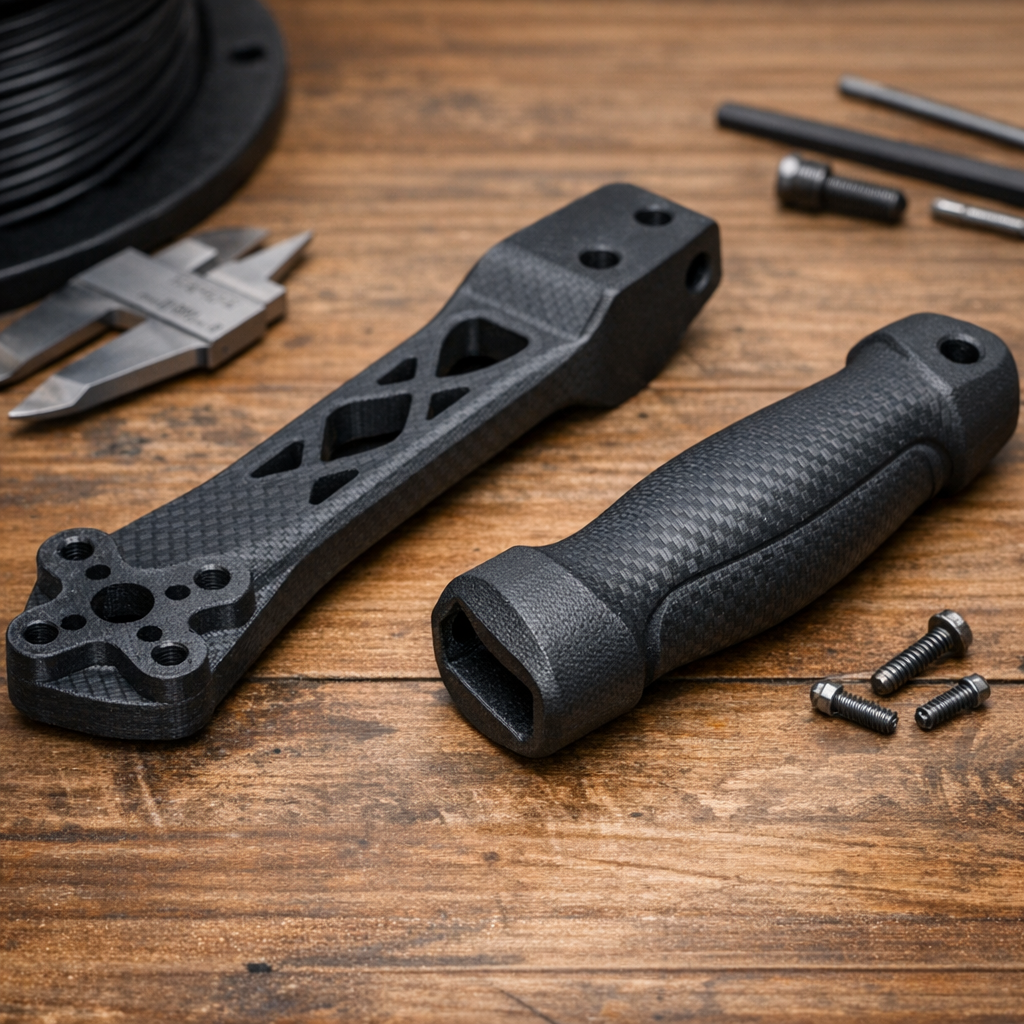
Why Your Strong Filament Still Breaks
The plastic is strong. The layer lines are weak. 3D printing builds in layers. If those layers don't stick well, the part snaps along them. A few things fix that.
Layer Lines Snap First
Wet filament, cold nozzle, or low flow = weak bonds between layers. Dry nylon and polycarbonate before printing. Bump nozzle temp 5–10°C if layers separate. Check that you're not under-extruding.
Print It the Right Way Up
Pull a part top to bottom and it breaks at the layers. Pull it sideways and it holds more. Orient your part so the force goes across the layers, not along them. We saw 30–40% more strength that way.
Bed Adhesion Comes First
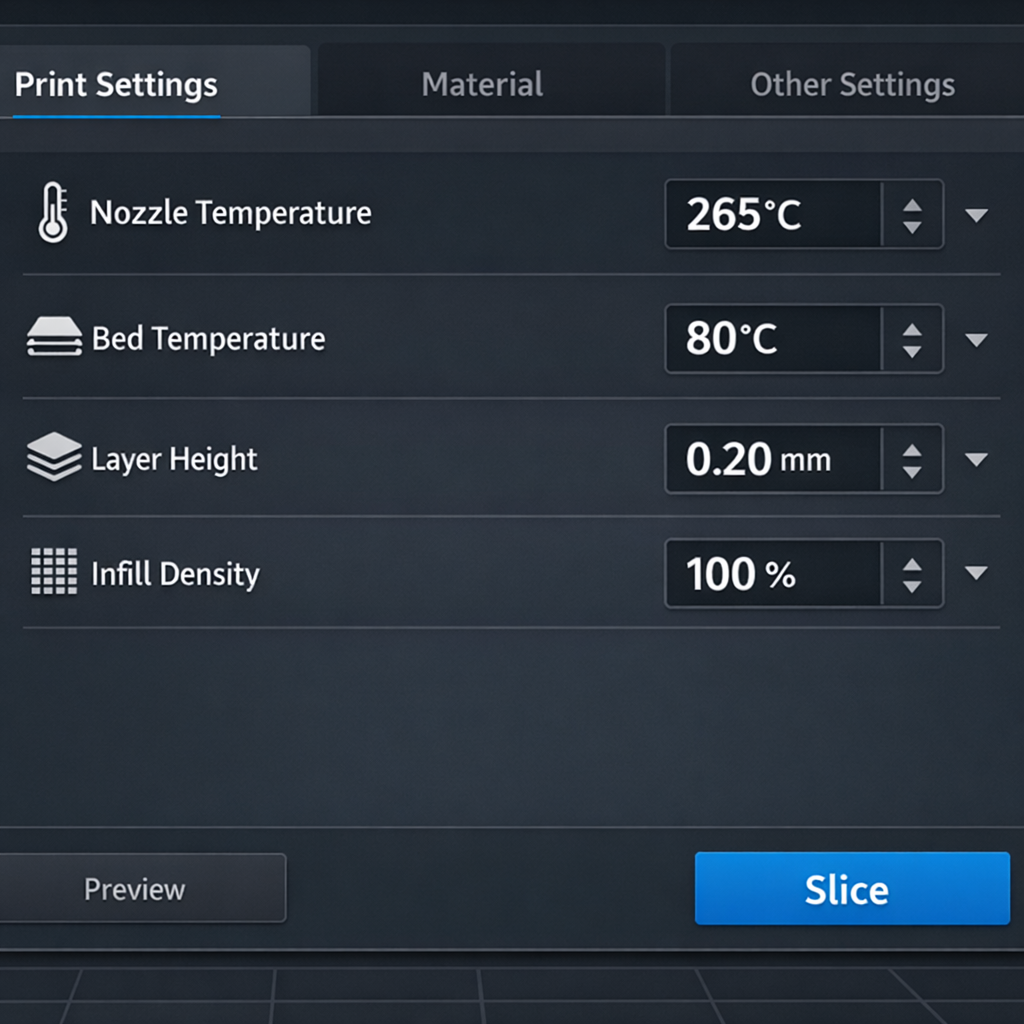
Strong filament that lifts off the bed is useless. Glue stick or hairspray. Hot enough bed (80°C for nylon, 100°C for polycarbonate). Clean surface. Get that right before worrying about anything else.
Quick Ranking
| Rank | Material | Print Temp | Best For |
|---|---|---|---|
| 1 | Carbon fiber nylon | 260–275°C | Brackets, drone parts, tool handles |
| 2 | Polycarbonate | 270–290°C | Heat-resistant parts, holds up to 110°C |
| 3 | ASA | 250–260°C | Outdoor parts, enclosures |
| 4 | Tough PLA | 210–230°C | Strong parts without the hassle |
| 5 | TPU | 220–235°C | Grips, gaskets, flexible stuff |
What About PLA and PETG?
PLA and PETG didn't make the cut. Same bracket: PLA holds maybe 10 kg, carbon fiber nylon holds 25+ kg. For figurines and prototypes, PLA is fine. For parts that carry weight, step up to Tough PLA or the others above. More on PLA vs PETG and resin vs filament.
Which One Should You Pick?
Match the filament to the job. Carbon fiber is strongest but needs the right setup. Here's the cheat sheet:
- Max strength, brackets, drone parts? Carbon fiber nylon.
- Part near heat or electronics? Polycarbonate. Holds up to 110°C.
- Outdoor or in the sun? ASA.
- Want stronger without the hassle? Tough PLA. Prints like normal PLA.
- Grips, phone cases, flexible stuff? TPU.
PLA runs 15–25 per kg. Carbon fiber nylon 45–65. Stronger = more expensive. Use our price tool to compare. For recycling, see our PLA guide — carbon fiber and nylon don't recycle easily.
How to Print Strong Filaments
Skip the basics and even the best filament fails. We learned that the hard way with one wet spool that gave us brittle junk until we dried it.
- Stick that first layer: Glue stick or hairspray. Hot bed (80°C nylon, 100°C polycarbonate).
- Dry nylon and polycarbonate: 4–6 hours in a dryer or food dehydrator. Wet = weak.
- Carbon fiber = hardened nozzle: Brass dies fast. Spend 20 bucks on steel.
- Enclosure: Helps nylon. Needed for big polycarbonate parts.
- 100% infill if you want max strength. Less infill = weaker part.
Mistakes We Made (So You Don't Have To)
- Wet nylon or polycarbonate: Snap city. Dry 6 hours. Keep spools sealed.
- Brass nozzle on carbon fiber: Eats through it. Get a hardened one first.
- Big polycarbonate part, no enclosure: Corners warp. Use an enclosure or keep it small.
- Nozzle too cold: Layers don't stick. Bump it 5–10°C.
- Wrong orientation: Weak when you pull top to bottom. Print so force goes sideways.
Carbon fiber eats brass nozzles. Steel lasts. Worth the 20 bucks before you try carbon fiber.
Amazon, Hardened NozzleNylon and polycarbonate suck up moisture. Wet = weak. Dry 4–6 hours. Cheap dryers work.
Amazon, Filament DryerBottom Line
Carbon fiber nylon wins on strength. Polycarbonate wins on heat. Tough PLA is the easy upgrade. Dry your filament, stick the first layer, and use the right nozzle. Compare prices on our main tool. More on resin vs filament and recycling PLA.
FAQ
- What is the strongest 3D printer filament?
-
Short answer: Carbon fiber nylon holds the most weight.
More: NylonX and similar brands lead. Polycarbonate is close. Both need a hardened nozzle, dry filament, and usually an enclosure. If the first layer doesn't stick, nothing else matters.
- Is carbon fiber filament stronger than nylon?
-
Short answer: Carbon fiber nylon is stronger than plain nylon.
More: The carbon fibers add stiffness and strength. Tradeoff: carbon fiber nylon is more brittle. Plain nylon flexes more and handles impact better.
- Why are 3D printed parts weaker than the box says?
-
Short answer: Layer lines. The box tests smooth injection-molded parts.
More: 3D prints have layers that can come apart. How you orient the part matters a lot. Force sideways across layers = stronger. Force up and down = weaker.
- Do I need a hardened nozzle for carbon fiber filament?
-
Short answer: Yes. Carbon fiber eats brass.
More: Hardened steel lasts. Budget 15–30 for a nozzle before you start.
- Should I dry nylon and polycarbonate before printing?
-
Short answer: Yes. Wet = weak and brittle.
More: Dry nylon 6 hours, polycarbonate 4–6. Same spool: wet gave us junk, dry gave strong prints. Keep spools sealed after opening.
- Is polycarbonate stronger than nylon?
-
Short answer: Similar strength. Polycarbonate = heat. Nylon = impact.
More: Hot part? Polycarbonate. Part that gets hit? Nylon.
- What temperature for carbon fiber nylon?
-
Short answer: 260–275°C. Bed 80–90°C.
More: Start at 265°C. Too low and layers do not stick. Too high can cause stringing. Check your brand’s recommended settings.
- Can I print carbon fiber on a cheap 3D printer?
-
Short answer: Carbon fiber PLA, yes. Carbon fiber nylon needs 260°C+ and a hardened nozzle.
More: Carbon fiber PLA prints like normal PLA. Nylon and polycarbonate need a hotter printer. Check your specs first.
- Why are my nylon parts weak and brittle?
-
Short answer: Moisture. Nylon loves water.
More: Dry 6 hours at 70°C. Spool sat out for days? Dry it again. Same spool, dry vs wet: huge difference.
- What infill for strongest 3D prints?
-
Short answer: 100% infill for maximum strength.
More: Less infill saves filament and weight but weakens the part. For parts that take real load, use 100%. How you orient the part often matters more than the infill pattern.
- Is Tough PLA worth it?
-
Short answer: Yes. About twice as strong as regular PLA, same easy printing.
More: No enclosure, no special nozzle. Perfect first step into stronger filaments. Skip it for hot environments.
- What is the strongest filament for heat?
-
Short answer: Polycarbonate. Holds up to about 110°C.
More: PLA and PETG soften around 60°C. Nylon around 80°C. For hot electronics or sun, polycarbonate wins.
Stop overpaying for 3D filament!
Compare brands and save today. Our tool shows real prices from Amazon, Ebay, AliExpress and manufacturer stores.
Compare brands & save todayTransparency: This article contains Amazon affiliate links. We earn from qualifying purchases at no extra cost to you. Recommendations are based on our tests. We only link to products we use ourselves.