Is it Safe? The Ultimate Guide to Food Safe 3D Printer Filaments
FDA compliance is not enough. Layer gaps harbor bacteria. Nozzle choice, coatings, and when to use molds instead.
Compare prices & save today
Sort by $/kg, filter by PLA, PETG, ABS. Real prices from Amazon, Ebay & AliExpress and manufacturer stores—find the cheapest filament in seconds.
CompareIs it safe? Food safe 3D printer filaments exist, but the material is only half the story. FDA-certified PLA or PETG does not make your print food safe. Bacteria hide in the gaps between layers. The printing process matters as much as the filament. This guide explains the difference and what you can actually do. Compare filament prices on our main tool.
Many users assume PLA is food safe because it comes from corn. Others buy FDA-compliant PETG and think they are done. The reality is more nuanced. The FDA CFR 21 Part 177 covers food contact materials. But certification applies to the raw plastic, not to 3D printed objects with layer gaps and nozzle residues. We researched manufacturer datasheets and university extension guides. Here is what we found.
FDA Compliant vs Food Safe. What Changes
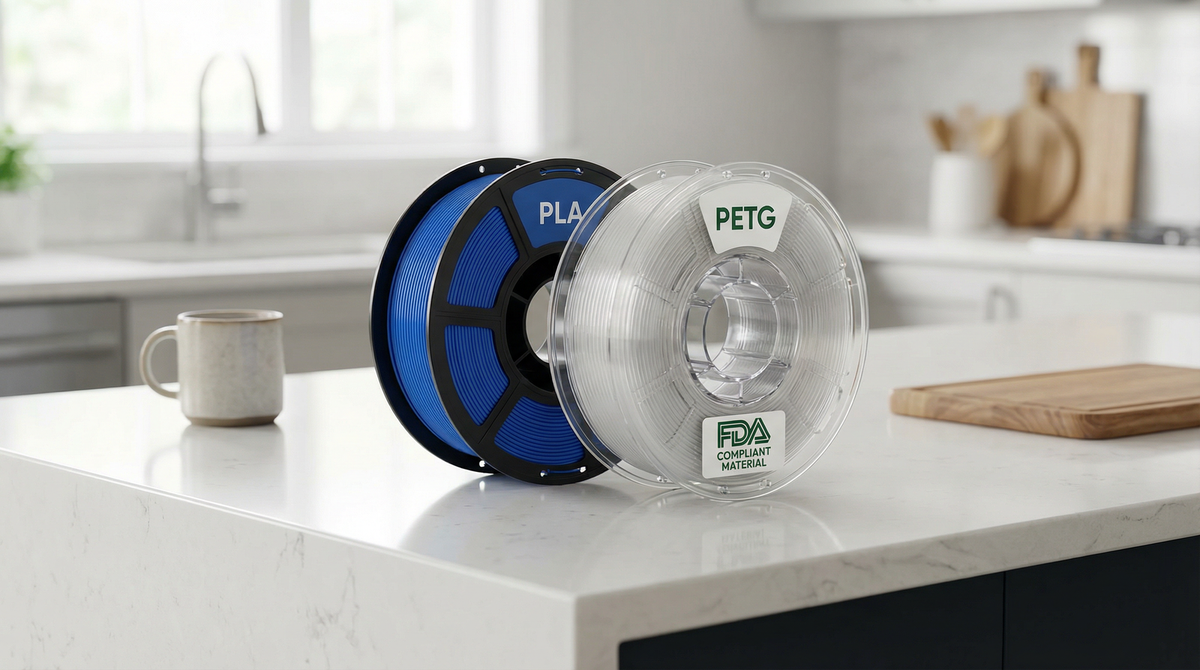
Food grade means the material is permitted for food contact. Food safe means it meets the requirements for your use and does not create a hazard. FDA CFR 21 Part 177 lists polymers approved for food contact. PLA, PETG, PET, PP, and some nylons appear there. The EU uses Regulation 10/2011 for similar approvals.
Important: compliant does not mean expressly approved. Many brands say FDA compliant. That usually means the base polymer fits the regulations. Additives, colors, and masterbatch can change that. Red, orange, and pink pigments often fail compliance because of heavy metals. Always check the manufacturer datasheet for your exact product and color. Formlabs' food safe guide explains that no resin is food safe by default. For filament, the same caution applies. The raw material is one factor. The printed object is another.
Why Layer Gaps Hide Bacteria
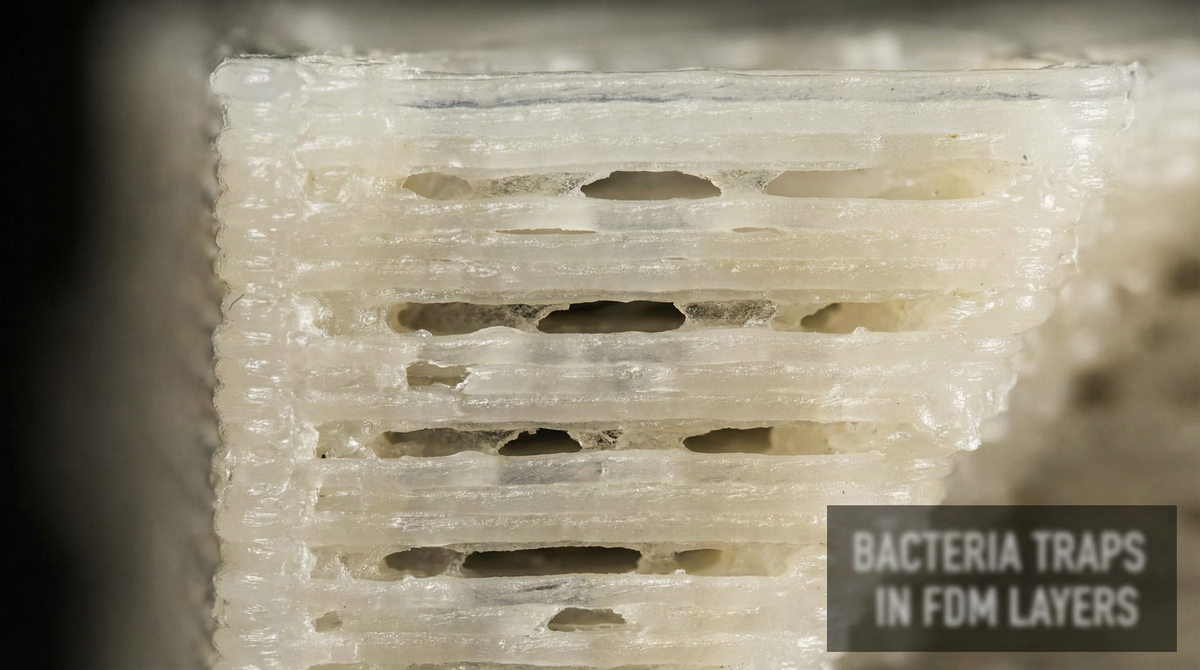
FDM prints layer by layer. Each layer leaves small crevices where the next layer bonds. Those crevices collect food residue. Bacteria like E. coli and salmonella grow in warm, moist niches. A 3D printed cup or cutting board can become unsafe within days if not properly cleaned. Oklahoma State University Extension recommends smooth, crevice-free surfaces for food contact. 3D prints are the opposite by default.
Lower layer height reduces the gap depth. 0.1mm or 0.15mm is better than 0.2mm or 0.3mm. But crevices remain. Chemical smoothing with acetone for ABS or ethyl acetate for PET can flatten the surface. So can food-safe coatings. None of these guarantee long-term safety. Dishwasher heat can warp PLA and PETG. Coatings can degrade. We treat food contact prints as short-term use unless professionally sealed.
Which Filaments Are FDA Compliant?
PLA, PET, PETG, PP, HIPS, co-polyester, and some nylons and ABS grades appear in FDA and EU food contact lists. Color matters. Many brands exclude red, orange, and pink. Always verify the exact product. Prusament, Polymaker, and Fillamentum publish compliance data. Look for FDA 21 CFR 177 or EU 10/2011 on the datasheet.
Dishwasher use rules out PLA and standard PETG. They soften around 60–70°C. PP and some co-polyesters handle dishwasher temperatures. PEI holds even higher heat but needs 300°C+ printing. For cold food, brief contact, PLA and PETG are common choices. For hot liquids or dishwasher cleaning, PP or high-temp PLA. For our material comparison, see the strongest filaments guide. Strong and food safe are different questions.
| Material | FDA | Dishwasher | Best use |
|---|---|---|---|
| PLA | Many brands compliant | No | Cold food, short contact |
| PETG | Many brands compliant | No | Cold food, light use |
| PP | Compliant | Yes | Dishwasher-safe containers |
| Co-polyester | Some approved | Yes | Hot liquids, dishwasher |
Nozzle and Printer Contamination
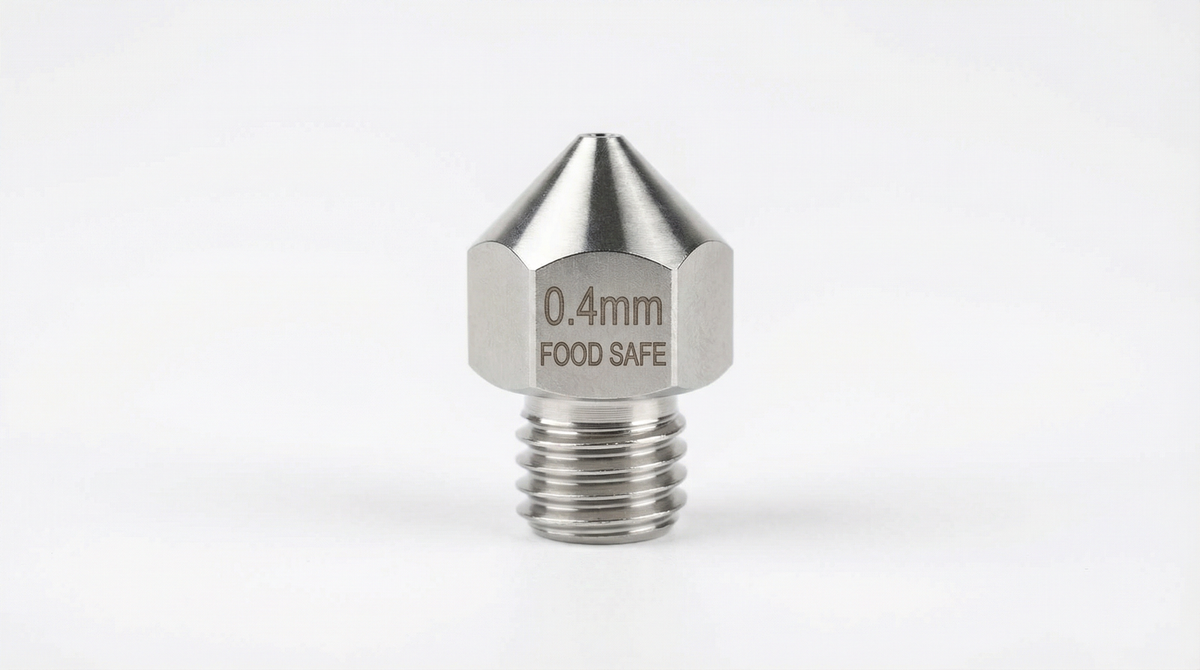
Brass nozzles often contain lead. Lead can migrate into the print. For food contact, use a stainless steel nozzle. Dedicate that nozzle to food-safe filaments only. Do not print carbon fiber or glow-in-the-dark filament and then switch to PLA for a food project. Residues from previous prints can contaminate the new one.
Clean the print bed. Avoid glue stick or hairspray on the bottom surface that will touch food. If you use adhesives, keep them off the food-contact area. Store filament in a dry box. Moisture does not make filament toxic, but wet filament prints worse and can leave uneven surfaces that trap more bacteria.
Food Safe Coatings. What Works
Coatings seal the surface and smooth layer lines. Masterbond EP42HT-2FG and ArtResin are FDA-approved epoxy options. PTFE coatings exist. Shellac and food-safe wax work for some uses. Apply according to manufacturer instructions. Coatings do not last forever. They can chip or degrade. Dishwasher cycles may damage them. We use coatings for display or light food contact. For heavy use, we prefer injection-molded food containers.
Chemical smoothing with acetone or ethyl acetate can reduce gaps before coating. Acetone works on ABS and some ASA. Ethyl acetate works on PET and PETG. Both require ventilation. Test on a scrap piece first. Smoothed surfaces are easier to clean but not automatically food safe. The base material must still be compliant.
Look for brands that publish FDA 21 CFR 177 compliance. Avoid red, orange, pink. Use for cold food, short contact only.
Amazon, FDA PLARequired for food contact. Brass nozzles may contain lead. Dedicate this nozzle to food-safe filaments only.
Amazon, Stainless Nozzle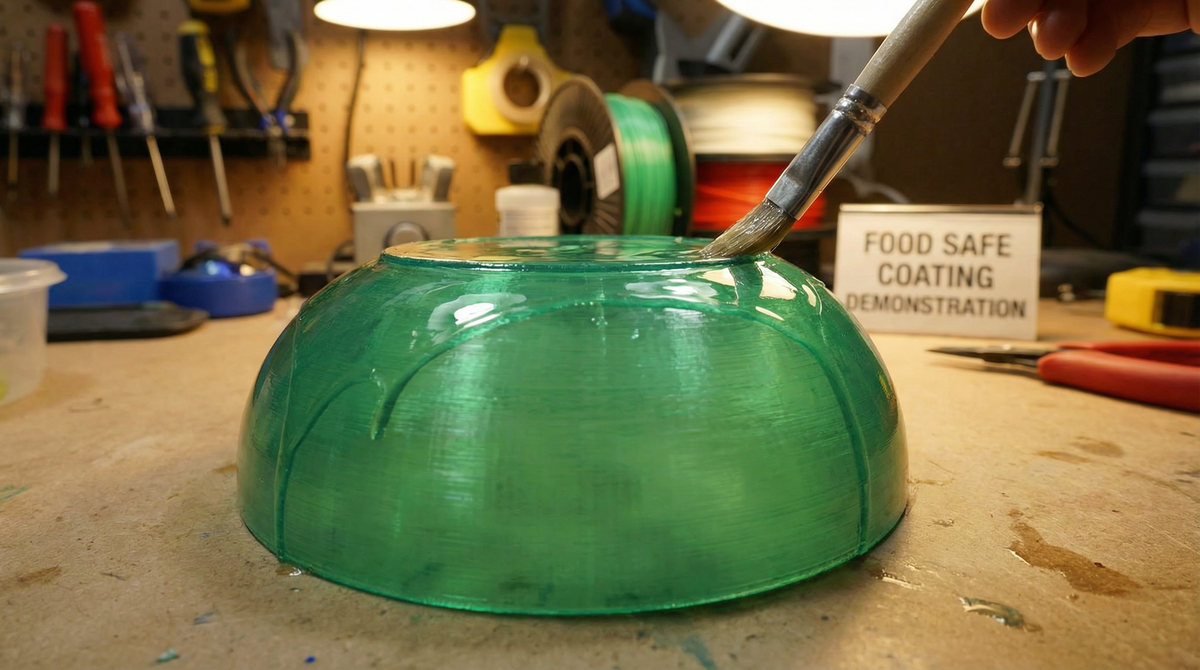
Better Option. Use 3D Prints as Molds
The safest approach is indirect contact. Print a mold. Cast food-safe silicone or vacuum-form food-safe plastic over it. The 3D print never touches the food. Chocolate molds, cookie cutters, custom shapes. Formlabs and Oklahoma State both recommend this. Your print can be any material. The final food-contact part is made from certified materials with smooth surfaces.
Quick Checklist for Food Contact Prints
- Choose FDA-compliant filament. Check the datasheet for your exact product and color.
- Use a stainless steel nozzle. Do not use brass for food prints.
- Print at low layer height. 0.1mm or 0.15mm reduces crevice depth.
- Dedicate nozzle and printer to food-safe filaments. No carbon fiber or glow filament before.
- Consider coating with FDA-approved epoxy. Or use the print as a mold instead.
- Wash by hand with warm water and mild detergent. Avoid dishwasher unless the material is rated for it.
- Treat prints as short-term use. Replace when surfaces show wear or coating chips.
What We Cannot Guarantee
We are not a certification body. This guide summarizes public sources. Your use case may have different requirements. Commercial food prep has stricter rules than home use. When in doubt, use 3D printing for molds and make the food-contact part from traditional materials. For disposal of non-food prints, see our PLA recycle guide.
Bottom Line
FDA-compliant filament is the starting point. The printing process matters. Layer gaps harbor bacteria. Use stainless nozzles, low layer height, and consider coatings or molds. For serious food contact, injection-molded certified products are safer. Compare filament prices on our main tool. For resin safety, our resin vs filament guide notes that no standard resin is food safe.
FAQ
- Is PLA food safe?
-
Short answer: Many PLA brands are FDA compliant. The printed object is another story. Layer gaps harbor bacteria.
Detailed: The raw material can meet FDA 21 CFR 177. Colors matter. Red, orange, and pink often fail. The 3D printed surface has crevices. Bacteria grow there. Use low layer height and consider coatings. Treat as short-term use.
- Is PETG food safe?
-
Short answer: Many PETG brands are FDA compliant. Same cautions as PLA. Layer gaps, nozzle material, and cleaning matter.
Detailed: PETG is often listed for food contact. Check the brand datasheet. Use stainless nozzle. Chemical smoothing with ethyl acetate can reduce gaps. Not dishwasher safe. Softens around 70°C.
- Why do 3D prints harbor bacteria?
-
Short answer: Layer lines create small crevices. Food residue and moisture collect there. Bacteria grow.
Detailed: FDM prints have gaps between layers. Smooth surfaces are easier to clean. Lower layer height helps. Coatings seal the surface. Single-use prints reduce the risk. Multi-use needs careful cleaning.
- Can I put 3D printed parts in the dishwasher?
-
Short answer: Only if the material is rated for it. PLA and PETG soften at 60–70°C.
Detailed: PP and some co-polyesters handle dishwasher heat. PLA and PETG warp. Check the manufacturer datasheet. Turning off the dry cycle may help. Hand wash is safer for most filaments.
- Do I need a special nozzle for food safe printing?
-
Short answer: Yes. Use stainless steel. Brass nozzles often contain lead.
Detailed: Lead can migrate into the print. Stainless steel avoids that. Dedicate the nozzle to food-safe filaments. Do not print carbon fiber or glow filament and then switch to PLA for food.
- What is FDA compliant vs FDA approved?
-
Short answer: Compliant means the material meets regulations. Approved means explicit certification. Many brands use compliant.
Detailed: FDA CFR 21 Part 177 lists approved polymers. Compliant usually means the base material fits. Additives and colors can change that. Check the technical datasheet for your product.
- Can I use 3D prints for chocolate molds?
-
Short answer: Yes. The mold does not touch food directly if you use a food-safe barrier.
Detailed: Vacuum-form food-safe plastic over the 3D printed mold. Or cast silicone. The print is the mold negative. The final food-contact surface is made from certified materials.
- What coating is food safe for 3D prints?
-
Short answer: FDA-approved epoxy like Masterbond EP42HT-2FG or ArtResin. PTFE coatings exist. Follow manufacturer instructions.
Detailed: Coatings seal layer lines. They can chip or degrade. Not all are dishwasher safe. Use for light contact. Replace when worn.
Stop overpaying for 3D filament!
Compare brands and save today. Our tool shows real prices from Amazon, Ebay, AliExpress and manufacturer stores.
Compare brands & save todayTransparency: This article contains Amazon affiliate links. We earn from qualifying purchases at no extra cost to you. We only recommend products we would use for food contact projects.