Best Resin 3D Printers 2026: Honest Buyer's Guide
Elegoo Saturn 4, Mars 4, Anycubic, Phrozen. What to buy and what to avoid based on what you actually print.
Compare prices & save today
Sort by $/kg, filter by PLA, PETG, ABS. Real prices from Amazon, Ebay & AliExpress and manufacturer stores—find the cheapest filament in seconds.
CompareIf you've been browsing Amazon or YouTube for a resin 3D printer lately, I don't envy you. The market has become a chaotic noise of buzzwords. Manufacturers scream about 14K resolution, AI failure detection, and high-speed ACF films. Every few months a new flagship machine appears that supposedly makes the previous one obsolete.
But here's the uncomfortable truth most reviews won't tell you. On paper, almost every modern resin printer looks the same. They all use monochrome LCD screens. They all print at roughly 0.05mm layer height. They all cost between $200 and $600. So how do you choose?
I've run liters of grey resin through the most popular machines from Elegoo, Anycubic, and Phrozen. I've dealt with auto-leveling plates that drifted after two prints, Wi-Fi that refused my network, and vats that were a nightmare to clean. This isn't a spec sheet. It's what it's actually like to live with these machines in 2026, grouped by what matters. What you're trying to make.
Static vs. Mechanical Motion
Before specific models, the elephant in the room. In late 2024 and through 2025, resin printing split into two design philosophies around speed.
The ACF Film Approach
This was the standard until recently. Printers like the Saturn 3 Ultra and Mars 4 Ultra use a special release film called ACF instead of FEP. It's slightly textured and non-stick, so the printer can peel layers off faster without suction destroying your model. Reliable. No extra moving parts. Downside: ACF film costs $30–40 a sheet to replace and slightly blurs fine details.
The Tilting Vat Approach
This is the new trend. Instead of lifting the build plate 5–10mm to peel, the entire resin vat physically tilts down. Mesmerizing to watch and 40–50% faster. But it adds mechanical complexity. Motors, springs, sensors. If that mechanism fails in two years, your printer is a brick.
My take: If you print once a week, reliability is king. Speed is nice but secondary. If you run a print farm, the tilt saves real money.
Mid-Size Workhorses
For most people, this is the category to shop. 10-inch screens, roughly 220×120mm build area. Large enough for a full squad of Warhammer minis, a bust, or cosplay parts in sections. Small enough for a standard desk.
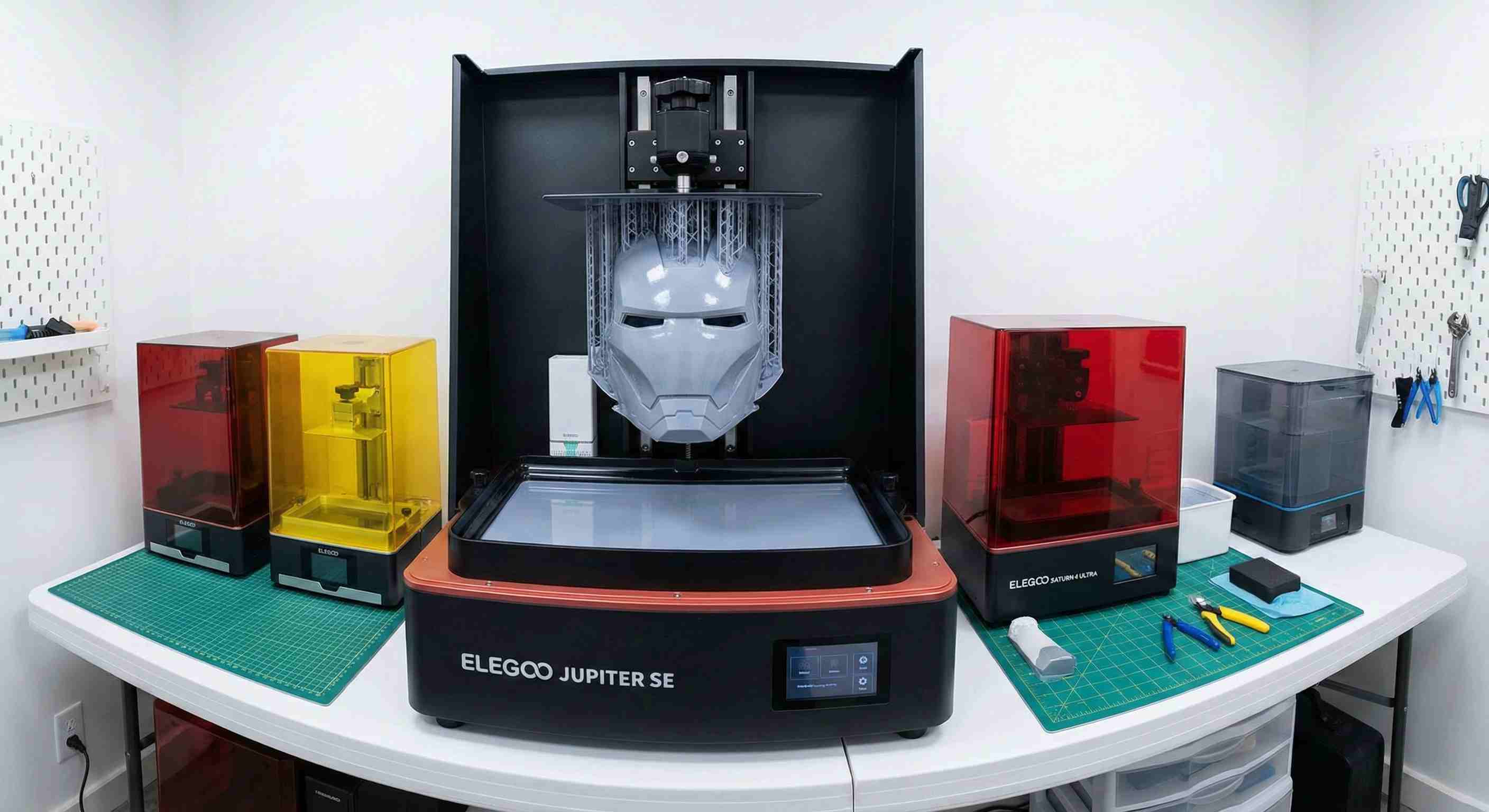
Elegoo Saturn 4 Ultra
Elegoo holds the crown right now. The Saturn 4 Ultra isn't just an upgrade. It's a rethink. The killer feature isn't 12K resolution. It's true auto-leveling. Sensors actually map the plate. You take it out of the box, pour resin, and print. No paper calibration. No screws. For beginners that removes the #1 cause of failed prints.
Combined with the tilting vat it's blazing fast. A full plate of minis in about 2 hours vs 4 on older machines. The AI failure camera is hit-or-miss, but the core printing experience is the best on the market.
Elegoo Saturn 3 Ultra
Why recommend an older model? Reliability. The Saturn 3 Ultra uses the static ACF method. No tilting motors to break. Proven track record. If you want to save $100 or avoid mechanical complexity, it's still a beast. Wi-Fi is just as good. Print quality virtually identical to the 4 Ultra.
Anycubic Photon Mono M5s Pro
Anycubic makes great hardware but struggles with software polish. The M5s Pro is a spec monster (14K resolution) but in my testing the auto-leveling was less consistent than Elegoo. Sometimes needed manual offsets for the first layer. That said, if you find it $100 cheaper on sale, it's a tempting value. Just be prepared to tinker more.
Small Format for Detail
There's a misconception that bigger is better. In resin printing the opposite is often true. If you only print D&D minis, jewelry, or small models, buy a smaller printer.
Why? Pixel density. A 9K screen in a 7-inch area produces sharper pixels than a 12K screen stretched across 10 inches. Like a Retina phone vs a 1080p 60-inch TV. Up close the phone looks sharper.
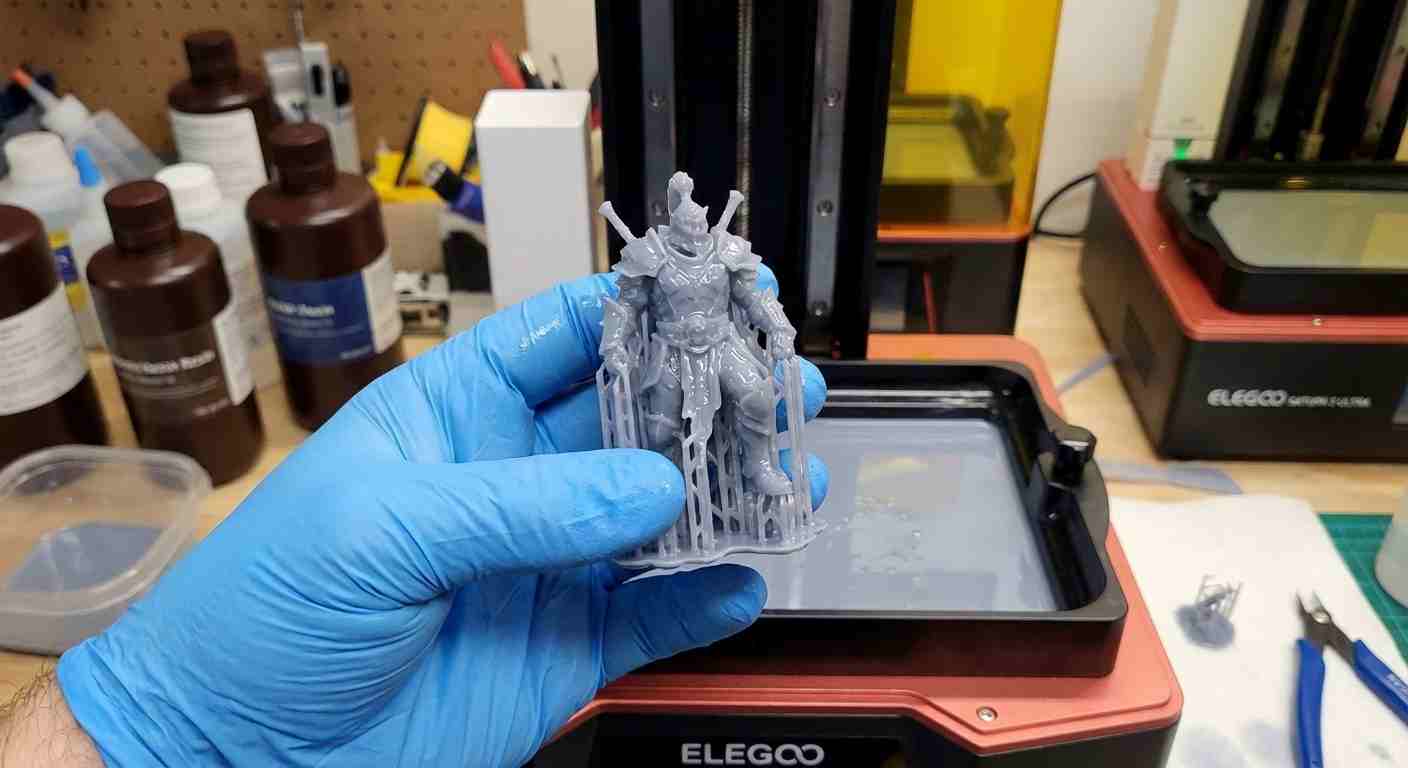
Elegoo Mars 4 Ultra
Dollar for dollar, the best printer for miniature painters. At around $250–300 the Mars 4 Ultra offers the same Ultra features as its big brother. Wi-Fi, ACF film, fast speeds. Compact footprint. Detail is staggering. At 18 microns per pixel, layer lines are invisible.
The 4-point leveling is a bit old-school compared to ball-joint systems. Slightly annoying to dial in at first. But once set, it stays set.
Anycubic Photon Mono 2
If your budget is strict (under $200) this is the gatekeeper. The Photon Mono 2 lacks Wi-Fi and uses a 4K screen. But honestly? Once you paint the miniature you'll struggle to tell the difference between 4K and 9K from three feet away. Workhorse. Cheap parts. Low-risk entry into the hobby.
Large Format Reality
This is where dreams of printing Mandalorian helmets in one piece go to die. Or thrive, if you're loaded. Printers like the Elegoo Jupiter or Phrozen Sonic Mega 8K are massive metal boxes that dominate a workshop.
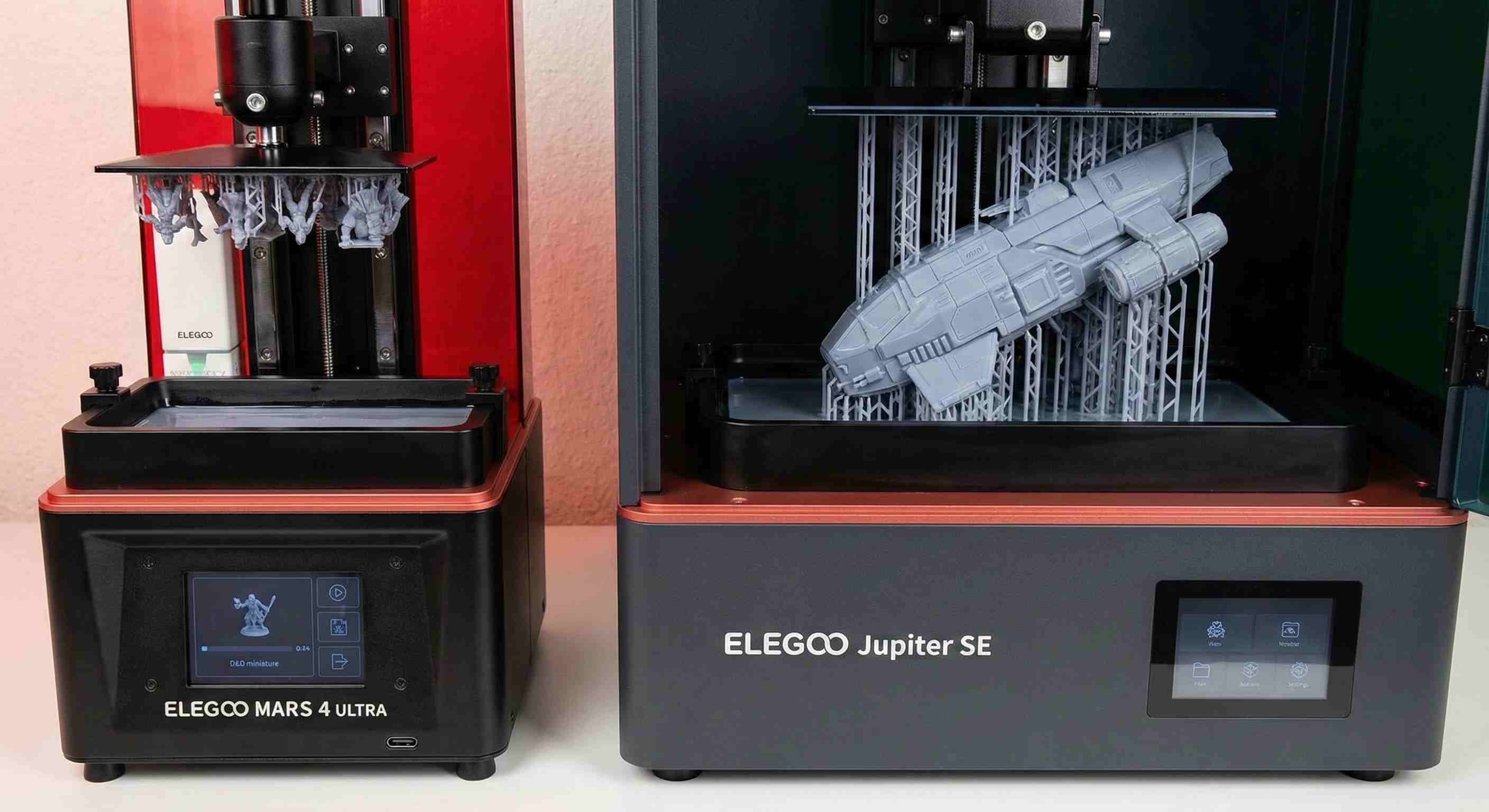
The Real Cost of Large Format
Reviews rarely mention the anxiety.
- Failure cost: A failed print on a Mars costs $1 of resin. On a Jupiter, $30–40 in one go.
- The mess: Cleaning a small vat is annoying. A Jupiter vat needs a bathtub-sized alcohol container and two people to move safely.
- Temperature: Large resin volumes are harder to keep warm in winter. More failures unless you have active heating.
Verdict: Unless you run a cosplay business or sell large statues, don't buy large format. Slice your model into 3 pieces and print on a Saturn. Cheaper, safer, easier.
Red Flags to Avoid
Marketing has gotten aggressive. Here's what to ignore.
14K and 16K Resolution
We've hit diminishing returns. The difference between 8K and 12K is barely visible under a magnifying glass. Don't pay $150 extra for a higher number. Look at XY resolution in microns. Anything under 30µm is professional grade.
High Speed Marketing
Boxes claim 150mm/hour. Technically true, but only with brittle high-speed resin and ugly 0.1mm layers. For real-world printing (standard grey, 0.05mm layers) even the fastest printers top out around 40–50mm/hour.
Proprietary Ecosystems
Some brands try to lock you into their cloud or specific resins. Avoid at all costs. Ensure your printer works with Lychee Slicer or Chitubox. If you can't use Lychee, don't buy it.
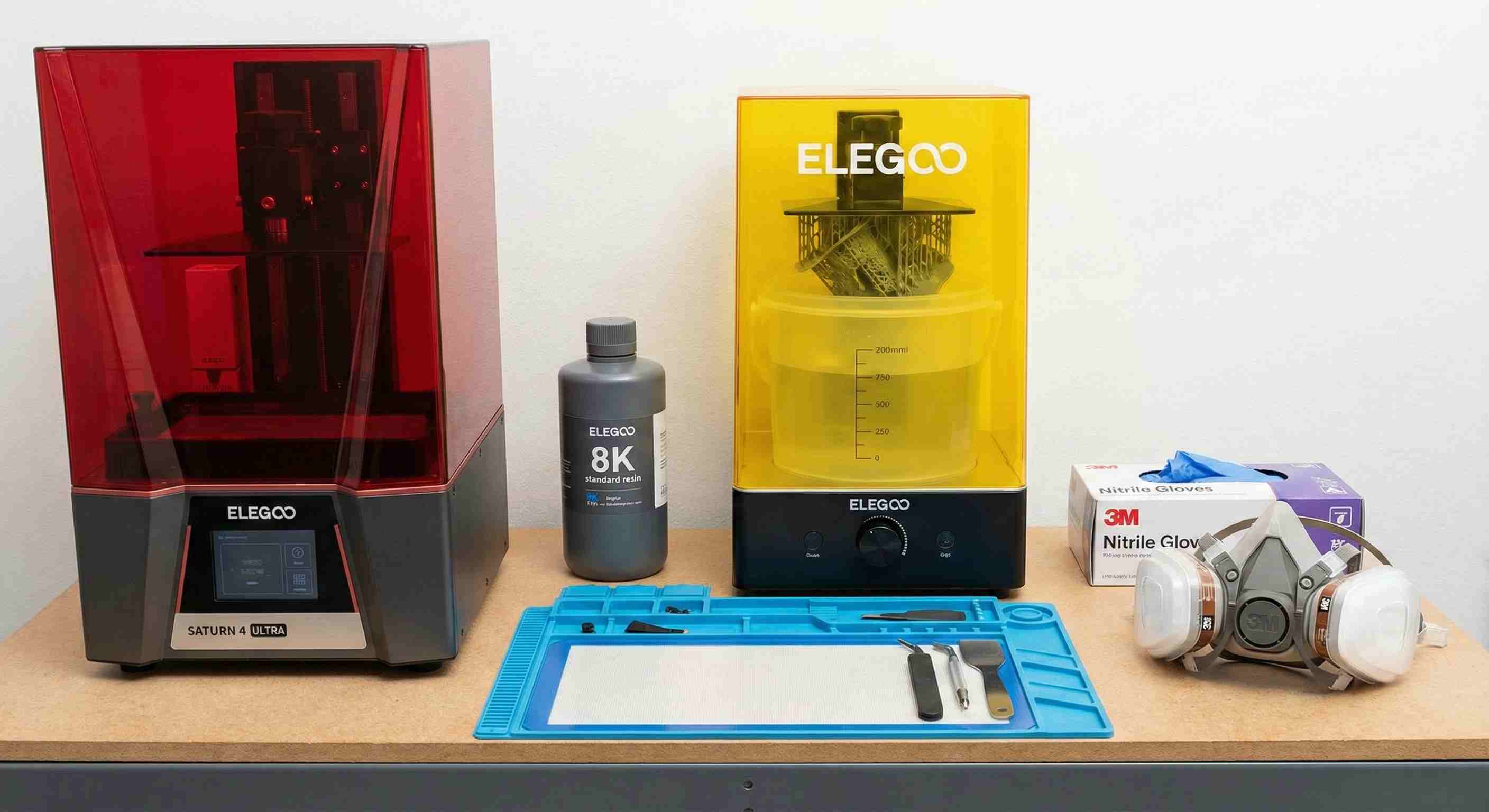
If I Were Spending My Own Money
If my workshop burned down tomorrow and I had to start from scratch, here's what I'd buy.
I want to print everything. The Elegoo Saturn 4 Ultra. True auto-leveling is a genuine quality-of-life boost. The tilting vat speed is addictive. Feels like future tech next to 2023 static printers.
Just the minis. The Elegoo Mars 4 Ultra. Half the desk space. Half the cost. Detail on 28mm figures is arguably sharper due to pixel density. Use the money saved for a premium wash and cure plus five bottles of good resin.
Business owner. The Phrozen Sonic Mighty 8K or Mega 8K S. Metal frames vibrate less. When you run a machine 24/7 you pay for durability, not AI cameras or tilting gimmicks.
Resin printing in 2026 is better than ever. Faster, smarter, easier. Remember: the printer is just a tool. The real magic comes from you and the slicer settings.
Stop overpaying for 3D filament!
Compare brands and save today. Our tool shows real prices from Amazon, Ebay, AliExpress and manufacturer stores.
Compare brands & save today